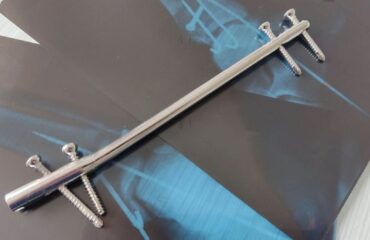


In the field of modern orthopaedic surgery, Interlocking Intramedullary Nails have revolutionized the way complex fractures are treated. These advanced orthopaedic implants play a vital role in providing stability, alignment, and rapid healing for long bone fractures such as those of the femur, tibia, and humerus. Designed with precision engineering and biocompatible materials, interlocking nails have become a trusted choice for orthopaedic surgeons worldwide.
Fractures of long bones are among the most common and severe injuries caused by trauma, accidents, or sports injuries. Earlier, external splints, traction, or simple fixation methods were used to align the bone fragments. However, with the evolution of modern orthopaedic technology, interlocking intramedullary nails now offer superior strength, stability, and early mobility for patients—minimizing complications and enhancing recovery outcomes.
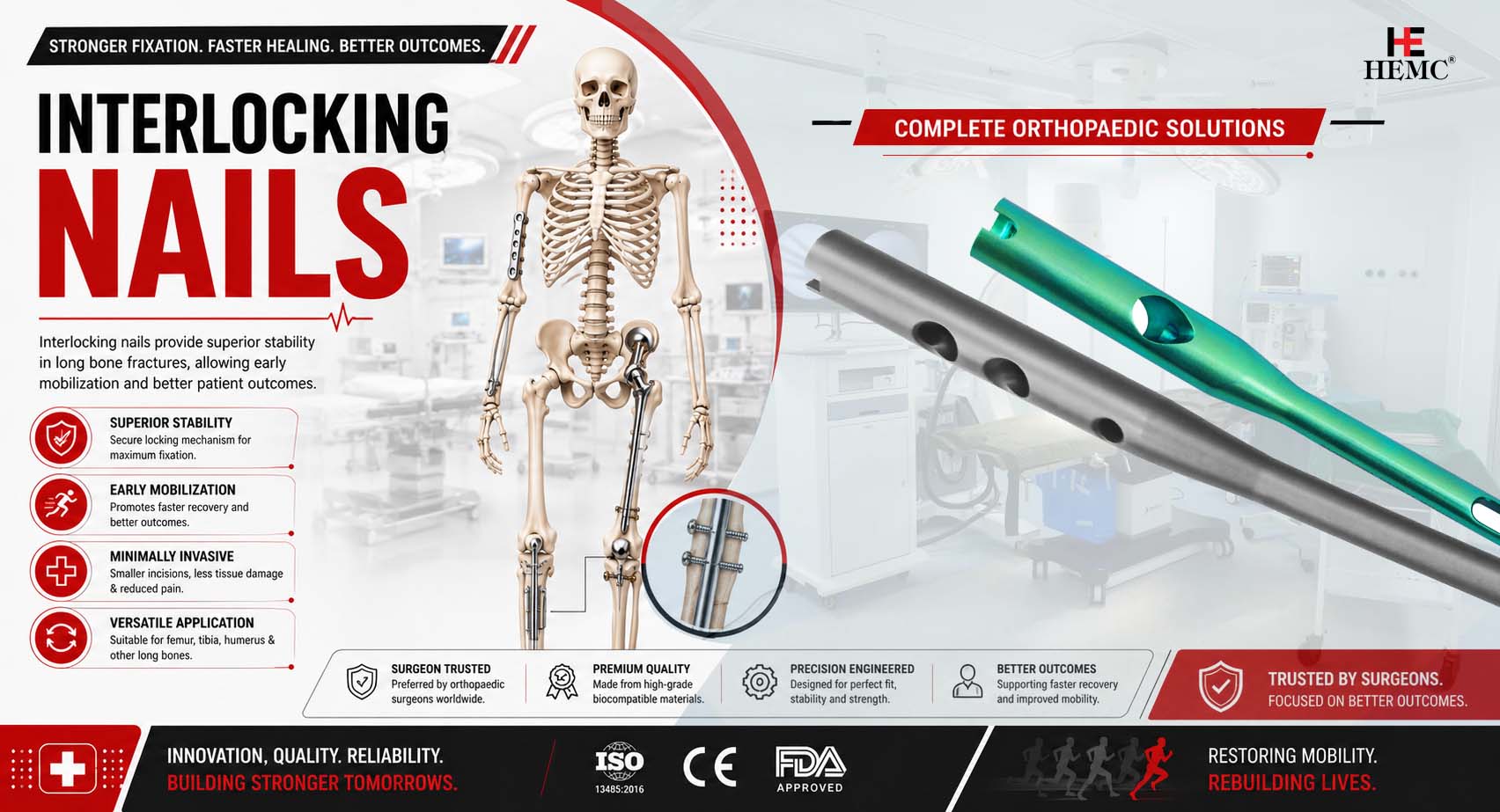
Understanding Interlocking Intramedullary Nails
An interlocking intramedullary nail is a metallic rod designed to be inserted into the medullary canal of a long bone, providing internal stabilization during the healing process. These nails are usually made from medical-grade stainless steel or titanium, ensuring high tensile strength, corrosion resistance, and biocompatibility.
The term “interlocking” refers to the screws that lock the nail at both ends, preventing rotation or shortening of the fractured bone. This system provides superior mechanical stability, enabling the bone to heal correctly even under functional loads.
Key functions include:
- Providing load-sharing fixation for the fractured bone
- Maintaining alignment and length of the bone
- Allowing early mobilization and weight-bearing
- Minimizing the need for external immobilization
Design and Structure
The design of interlocking nails varies based on the anatomical site and type of fracture. Typically, these implants have proximal and distal holes for locking screws, which secure the bone fragments in place. The nails can be solid or cannulated (hollow), depending on the surgeon’s preference and the patient’s condition.
Common types include:
- Femoral Interlocking Nails – Used for fractures in the shaft or subtrochanteric region of the femur.
- Tibial Interlocking Nails – Designed for fractures of the tibial shaft.
- Humeral Interlocking Nails – Used in humerus fractures for improved shoulder function and faster healing.
The locking screws play a crucial role in preventing rotational or axial displacement, ensuring rigid fixation. The use of locking plates and screws as complementary fixation tools further enhances the mechanical stability of the construct.
Material and Biomechanics
The choice of material in orthopaedic implants is critical to achieving optimal performance. Interlocking nails are typically made from:
- Titanium alloys (Ti-6Al-4V) – Lightweight, biocompatible, and corrosion-resistant.
- Stainless steel (316L) – High strength and cost-effective alternative.
These materials are carefully selected to ensure:
- High fatigue strength
- Resistance to mechanical deformation
- Long-term biocompatibility with human tissue
Biomechanically, intramedullary nails act as a load-sharing device, unlike plates that function as load-bearing devices. This means the nail and bone share the mechanical stress, promoting natural bone healing through controlled micromotion.
Advantages of Interlocking Intramedullary Nails
The introduction of interlocking nails marked a significant advancement in fracture management. Their advantages over traditional fixation systems include:
Enhanced Stability:
- The interlocking mechanism offers superior rotational and axial stability, preventing malalignment.
Minimally Invasive Surgery:
- The nail is inserted through a small incision, preserving the soft tissues and periosteal blood supply.
Early Weight-Bearing:
- Patients can begin mobilizing sooner, reducing hospital stay and preventing complications like joint stiffness.
Reduced Risk of Infection:
- As compared to external fixators, internal fixation lowers the risk of pin-tract infections and external contamination.
Biomechanical Superiority:
- The load-sharing property of intramedullary nails promotes natural healing and reduces implant failure.
Long-Term Durability:
- Titanium and stainless steel constructions ensure longevity and resistance to fatigue.
Fewer Complications:
- Properly aligned interlocking nails minimize issues such as shortening, rotation, or delayed union.
Comparison with Other Orthopaedic Implants
The world of orthopaedic implants offers a range of devices to meet diverse surgical needs, from locking plates and screws to hip prosthesis, spine implants, and external fixators. While each has a specific application, interlocking intramedullary nails offer a unique balance between rigidity and biological fixation.
Applications in Modern Orthopaedic Surgery
Interlocking nails are widely used for treating various fractures, including:
- Femoral shaft fractures
- Tibial shaft fractures
- Humeral shaft fractures
- Subtrochanteric and supracondylar fractures
- Pathological fractures
They are also beneficial in polytrauma patients, where early stabilization of long bones helps improve overall recovery and reduces complications like fat embolism or pulmonary distress.
Surgeons also combine interlocking nails with other orthopaedic implants such as locking plates, external fixators, or large fragment implants when dealing with comminuted or segmental fractures.
Interlocking Nails and Advancements in Implant Design
Continuous innovation in orthopaedic technology has led to newer, more refined designs of interlocking nails. Advanced models feature:
- Multi-directional locking options for enhanced stability.
- Anatomically contoured designs to match bone curvature.
- Cannulated structures to allow guidewire-assisted insertion.
- Radiolucent targeting systems for precise screw placement.
Modern systems also integrate features like distal dynamic locking, which allows controlled micro-motion at the fracture site—stimulating callus formation and accelerating healing.
With computer-assisted surgical systems and fluoroscopic guidance, the accuracy of nail insertion has improved drastically, ensuring excellent postoperative outcomes.
Role in Orthopaedic Trauma Management
The role of interlocking intramedullary nails extends beyond simple fracture fixation—they are a cornerstone of modern trauma care. In high-energy injuries involving multiple fractures, these nails offer internal stability, allowing early mobilization of patients and reducing secondary complications.
They are also preferred in osteoporotic fractures where bone density is compromised. The intramedullary positioning distributes the load along the bone axis, minimizing stress concentration at a single point.
Additionally, for nonunion or malunion cases, revision surgeries using interlocking nails combined with bone grafting techniques have shown excellent outcomes.
Integration with Other Orthopaedic Implant Systems
Orthopaedic treatment often requires a combination of multiple implants for optimal results. Surgeons may use locking plates and screws, external fixators, or large fragment implants in conjunction with interlocking nails depending on the fracture pattern.
- External Fixators: Serve as temporary stabilizers in open fractures before definitive fixation with nails.
- Locking Plates: Used for additional support in periarticular or comminuted fractures.
- Large Fragment Implants: Offer additional rigidity in load-bearing bones.
- Hip Prosthesis and Hip Implants: Used when fractures extend into the joint or when replacement is the best solution.
- Spine Implants: Maintain vertebral stability in spinal injuries associated with long bone fractures.
The versatility of interlocking nails ensures that they can be effectively used alongside these systems for comprehensive orthopaedic management.
Postoperative Care and Rehabilitation
After interlocking nail surgery, proper postoperative care is essential to ensure successful healing. Early mobilization and physiotherapy are critical for restoring muscle strength and joint movement. Regular follow-ups and radiographic evaluations help monitor bone union.
Complications are rare but may include infection, screw loosening, or delayed union. With advanced surgical techniques and high-quality orthopaedic implants, such risks have been significantly minimized.
Conclusion
Interlocking intramedullary nails represent a major advancement in orthopaedic implants, offering superior strength, stability, and biological compatibility for effective fracture management. Their ability to promote early weight-bearing, preserve soft tissue, and ensure precise alignment makes them an indispensable tool in orthopaedic trauma care.
As technology continues to evolve, the future of interlocking nails looks promising—with improvements in design, materials, and surgical techniques leading to even better clinical outcomes. When combined with complementary systems such as locking plates and screws, external fixators, hip implants, spine implants, and large fragment implants, they form the foundation of modern orthopaedic treatment strategies—helping patients regain mobility and quality of life after severe injuries.