


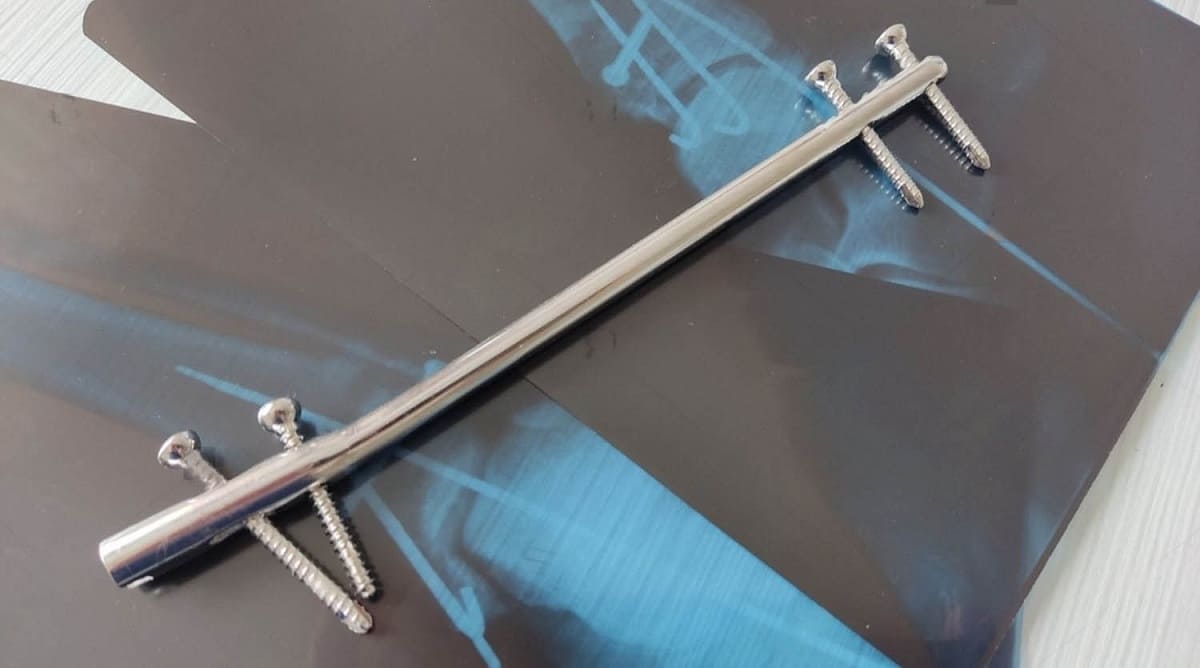
Interlocking nails are a type of orthopedic implant used primarily in the treatment of long bone fractures, such as those in the femur, tibia, and humerus. These nails are inserted into the marrow canal of the bone to stabilize the fracture and allow for proper healing. Here’s a more detailed explanation of interlocking nails:
Features and Function
- Design: Interlocking nails are typically made of metal (such as stainless steel or titanium) and are cylindrical rods with holes at both ends. The holes are designed for the insertion of locking screws.
- Mechanism: The nails are inserted into the bone canal, and screws are then inserted through the bone and into the holes at the ends of the nail. This “locks” the nail in place, providing stability to the fractured bone segments.
Types:
- Antegrade Nails: Inserted from the top of the bone (proximal end).
- Retrograde Nails: Inserted from the bottom of the bone (distal end).
Indications for Use
- Fracture Stabilization: Primarily used for diaphyseal fractures (those occurring in the middle section of long bones).
- Complex Fractures: Effective in stabilizing complex fractures where other methods may not provide adequate stability.
- Load Sharing: Allows the bone to share the load with the nail, promoting natural healing by stimulating bone growth and remodeling.
Benefits
- Minimally Invasive: Inserted through small incisions, leading to less tissue damage and quicker recovery times compared to traditional open reduction techniques.
- Early Mobilization: Provides stable fixation, allowing patients to start rehabilitation exercises sooner.
- Biomechanical Stability: The interlocking screws prevent rotational and axial movement, offering strong support during the healing process.
Procedure
- Preoperative Planning: The correct size and type of nail are selected based on the patient’s anatomy and the fracture pattern.
- Insertion: The nail is inserted into the marrow canal, typically using fluoroscopic guidance to ensure correct placement.
- Locking: Locking screws are inserted through the bone and into the nail’s locking holes to secure the implant.
Complications
- Infection: As with any surgical procedure, there is a risk of infection.
- Nonunion or Malunion: Improper healing of the fracture.
- Hardware Failure: Breakage or bending of the nail or screws, although this is relatively rare with modern materials and techniques.
Interlocking nails have revolutionized the treatment of long bone fractures, providing an effective and reliable method for bone stabilization and healing.
INTERLOCKING NAILS SIZES
The sizes of interlocking nails vary widely to accommodate different bones, fracture types, and patient anatomies. The dimensions typically considered for interlocking nails include length, diameter, and the configuration of the locking holes. Here’s a breakdown of the sizes:
Length
Interlocking nails come in various lengths to match the length of the bone being treated. Common lengths range from:
- Femoral Nails: 300 mm to 460 mm
- Tibial Nails: 240 mm to 420 mm
- Humeral Nails: 180 mm to 320 mm
Diameter
The diameter of interlocking nails is selected based on the internal diameter of the bone canal. Common diameters include:
- Femoral Nails: 9 mm to 15 mm
- Tibial Nails: 8 mm to 13 mm
Humeral Nails: 6 mm to 10 mm
Locking Hole Configuration
Interlocking nails have a variety of hole configurations to provide optimal fixation:
- Number of Holes: Usually 2 to 4 holes at each end.
- Hole Orientation: Can be static or dynamic (allowing some degree of controlled movement).
- Distal and Proximal Locking: Holes located at both ends of the nail for secure fixation.
Special Considerations
- Patient Anatomy: Pediatric patients or patients with smaller bones may require smaller, specially designed nails.
- Fracture Type: Comminuted fractures or fractures near joints might require specific designs or lengths.
Customization
- Many manufacturers provide sets of interlocking nails with a range of lengths and diameters, allowing surgeons to choose the most appropriate size during surgery.
Examples of Specific Nails
- Standard Femoral Nails: Lengths from 300 mm to 460 mm, diameters from 9 mm to 15 mm.
- Standard Tibial Nails: Lengths from 240 mm to 420 mm, diameters from 8 mm to 13 mm.
- Standard Humeral Nails: Lengths from 180 mm to 320 mm, diameters from 6 mm to 10 mm.
Pediatric Interlocking Nails
- Smaller diameters and lengths to accommodate the growing bones of children.
Specialty Nails
- Designed for specific types of fractures or bones with unique anatomical considerations.
By selecting the appropriate size and type of interlocking nail, surgeons can achieve optimal outcomes in fracture management, ensuring stability and promoting effective healing.

You must be logged in to post a comment.