


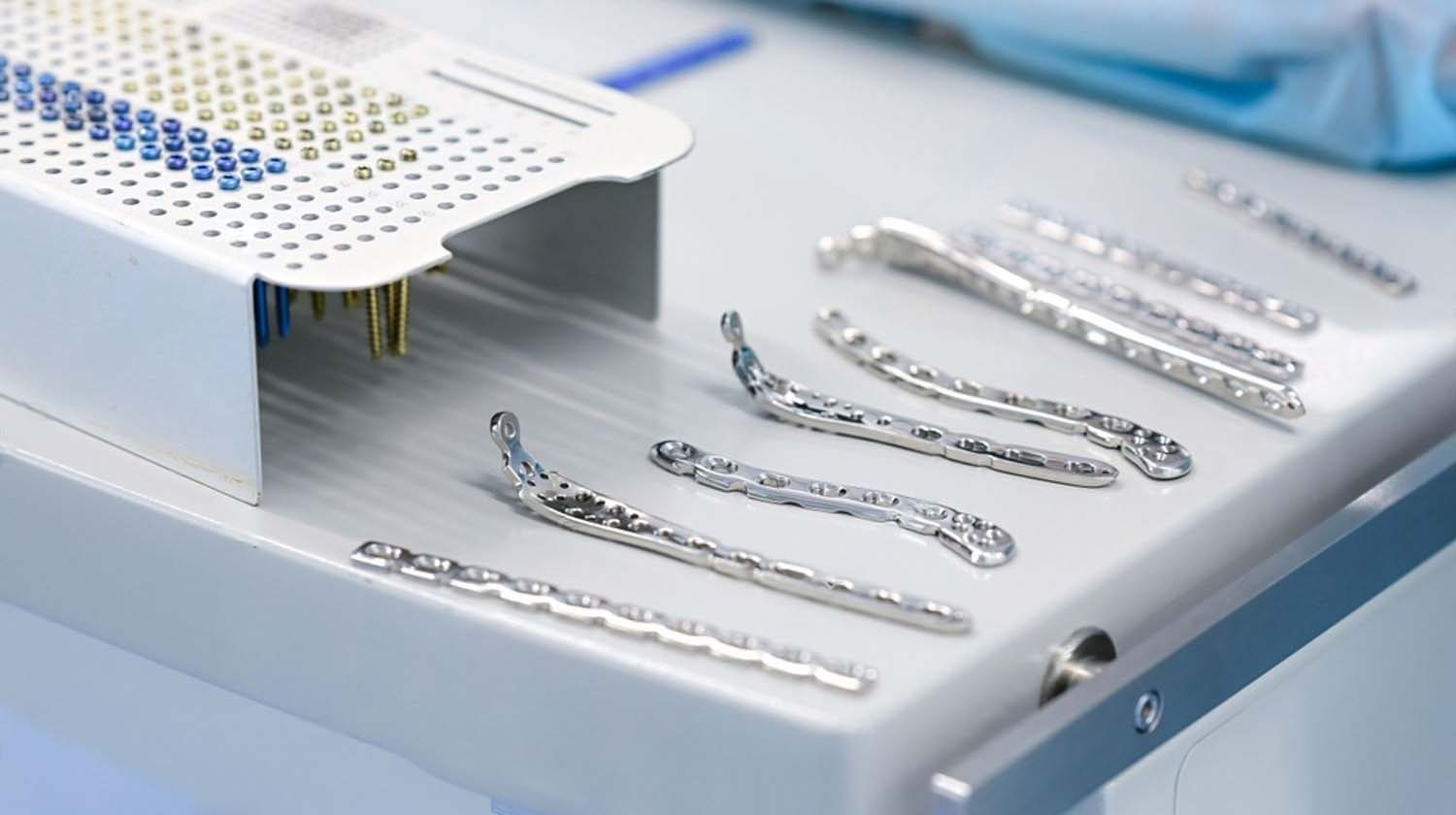
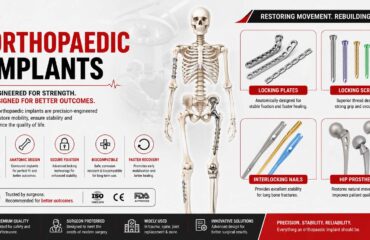
Orthopedic implants are medical devices used to support or replace damaged bones or joints, typically in cases of trauma, degenerative diseases, or congenital conditions. These implants are designed to restore function, improve mobility, and relieve pain. Here’s a detailed exploration of orthopedic implants:
Types of Orthopedic Implants
Joint Replacement Implants
These implants are used in cases where a joint is severely damaged by arthritis or injury.
- Hip Implants: Used in total hip arthroplasty, these replace both the ball and socket of the hip joint. Materials include metals (like titanium, cobalt-chromium), ceramics, and polyethylene.
- Knee Implants: Total knee replacement involves resurfacing the knee joint with metal and plastic components to allow smooth movement.
- Shoulder, Elbow, and Ankle Implants: These are less common but are used to treat severe joint degeneration.
Fracture Fixation Implants
These implants stabilize broken bones, allowing them to heal correctly.
- Plates and Screws: Metal plates, often made of titanium or stainless steel, are attached to the bone with screws to provide stability during healing.
- Intramedullary Nails (IM Nails): These rods are inserted into the bone’s medullary cavity to stabilize long bones, such as the femur or tibia.
- Pins and Wires: Smaller implants used for stabilizing fractures in smaller bones like fingers or toes.
Spinal Implants
Spinal implants are used to correct deformities, stabilize the spine, or treat degenerative conditions.
- Pedicle Screws and Rods: These devices provide stability to the vertebrae in spinal fusion surgeries.
- Cages: These are placed between vertebrae to maintain disc height and facilitate bone fusion.
- Artificial Discs: Used as an alternative to spinal fusion, these preserve motion in the spine.
Materials Used
Orthopedic implants must be strong, biocompatible, and resistant to corrosion. Common materials include:
- Titanium: Lightweight, strong, and highly biocompatible. Titanium is often used in joint replacements and bone fixation devices.
- Stainless Steel: Durable and cost-effective, commonly used in plates, screws, and nails.
- Cobalt-Chromium: Known for its hardness and wear resistance, often used in joint replacements.
- Polyethylene: A plastic used in joint replacement bearings to reduce friction and wear.
- Ceramics: Hard and wear-resistant, often used in hip implants for smooth articulation.
Implant Design Considerations
Orthopedic implants are designed to:
- Mimic the natural anatomy: Implants must closely replicate the form and function of the replaced bone or joint.
- Provide stability: Stability during the healing process is crucial, and implants are designed to provide this through mechanical fixation.
- Encourage biological integration: Some implants have porous surfaces or coatings that encourage bone growth into the implant, providing long-term stability.
Surgical Procedures
- Open Reduction and Internal Fixation (ORIF): A common procedure for fracture fixation, where implants like locking plates & screws, or IM nails are used to align and stabilize the bone.
- Total Joint Replacement: For joints damaged by arthritis or trauma, this involves replacing the damaged joint surfaces with metal, plastic, or ceramic components.
- Spinal Fusion: Used to stabilize the spine, this involves using implants like rods, screws, and cages to fuse two or more vertebrae together.
Complications and Challenges
While orthopedic implants are generally safe and effective, potential complications include:
- Infection: One of the most serious complications, requiring antibiotics or even implant removal.
- Implant Loosening: Over time, implants can loosen from the bone, often requiring revision surgery.
- Wear and Tear: Especially with joint replacements, the materials can wear out over time, particularly in active patients.
- Bone Loss (Osteolysis): Sometimes, the body reacts to implant wear particles, causing bone around the implant to deteriorate.
Innovations in Orthopedic Implants
- 3D Printing: Custom, patient-specific implants can now be designed and manufactured using 3D printing technology, improving fit and function.
- Smart Implants: Implants with embedded sensors can monitor healing and detect complications like infection or loosening.
- Biodegradable Implants: Research is underway into implants that can be absorbed by the body once the bone has healed, reducing the need for implant removal surgery.
Future of Orthopedic Implants
- Biomaterials: The development of advanced materials, such as composites or bioactive coatings, that improve implant performance and reduce complications.
- Regenerative Medicine: Combining implants with biological agents like stem cells or growth factors to promote natural bone healing and regeneration.

You must be logged in to post a comment.