

Bone fractures are among the most common orthopaedic injuries, affecting millions of people worldwide every year. While many simple fractures heal with casting or splinting, complex fractures often require surgical intervention to restore bone alignment and stability. One of the most effective solutions in modern orthopaedic surgery is the use of bone plates.
Bone plates have revolutionized fracture management by providing rigid fixation, promoting faster healing, and allowing patients to regain mobility sooner. With advancements in implant technology, various types of bone plates are now available, each designed for specific anatomical regions and fracture patterns.
In this comprehensive guide, we’ll explore what bone plates are, their types, clinical applications, benefits, and post-operative recovery, helping patients and healthcare professionals better understand their role in fracture fixation.
What Are Bone Plates?
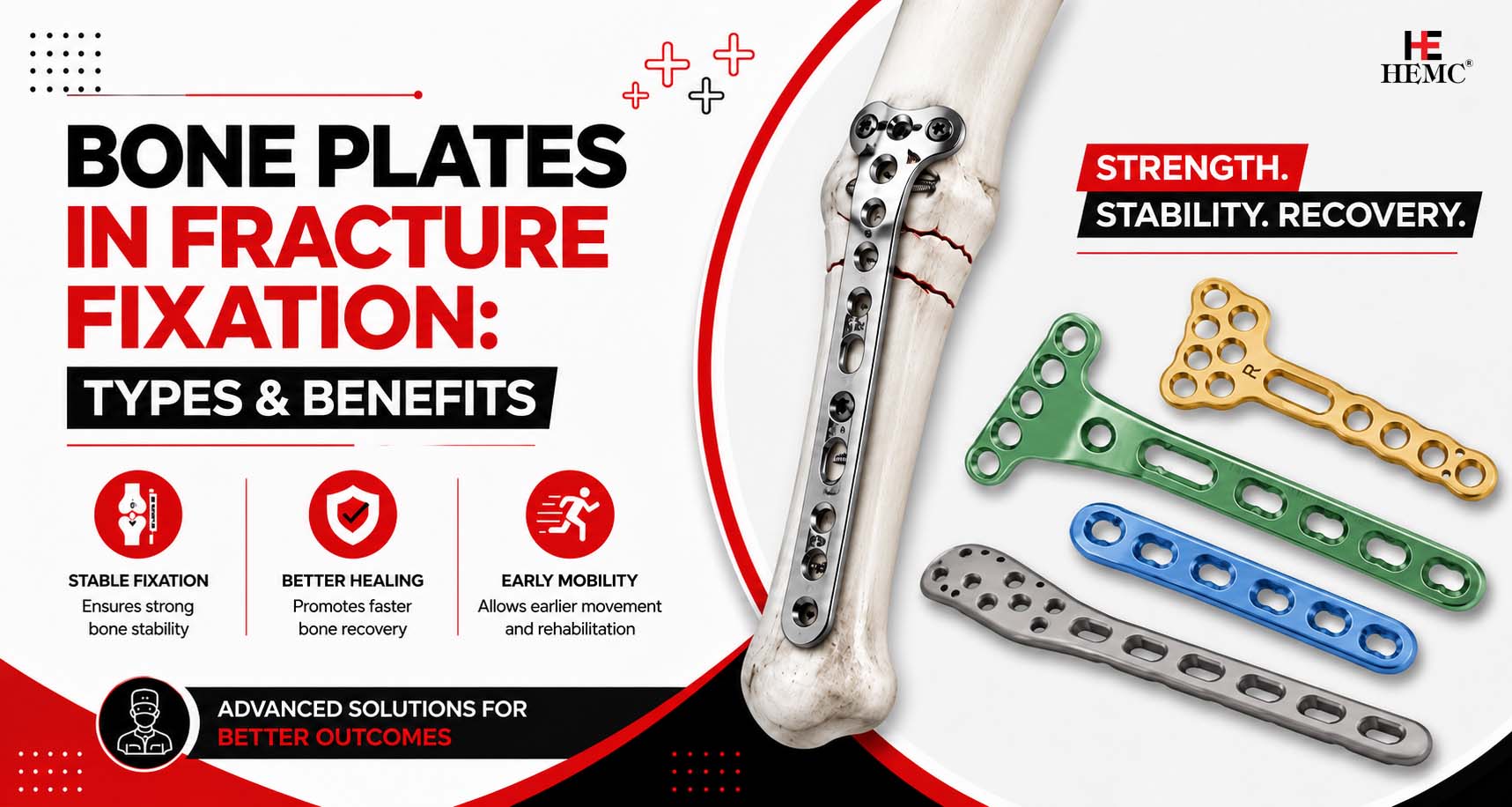
Bone plates are specially designed orthopaedic implants used to stabilize fractured bones during the healing process. They are attached directly to the bone using orthopaedic screws, ensuring proper alignment and preventing unwanted movement at the fracture site.
These implants function as an internal splint, maintaining bone position while natural healing occurs. Depending on the fracture type and location, surgeons select different plate designs to achieve optimal fixation.
Modern bone plates are commonly manufactured from:
- Medical-grade Stainless Steel
- Titanium Alloy
- Titanium
These materials offer excellent strength, corrosion resistance, and biocompatibility, reducing the risk of implant-related complications.
How Do Bone Plates Work?
Bone plates bridge the fractured segments of a bone and hold them securely in place using screws. This stable fixation allows new bone tissue to form across the fracture gap while maintaining proper anatomical alignment.
The primary goals of bone plate fixation include:
- Stabilizing fractured bones
- Restoring normal bone anatomy
- Maintaining fracture reduction
- Allowing early joint movement
- Reducing healing complications
- Promoting faster rehabilitation
Because the implant remains inside the body throughout the healing process, patients generally experience improved comfort compared to external fixation methods.
Types of Bone Plates
Different fractures require different fixation strategies. Modern orthopaedics offers numerous bone plate designs, each engineered for specific anatomical locations and clinical needs.
Locking Compression Plate (LCP)
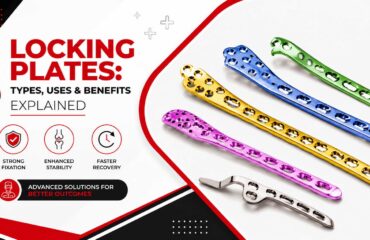
The Locking Compression Plate (LCP) is one of the most widely used orthopaedic implants today. Unlike conventional plates, LCP systems use locking screws that thread into the plate itself, creating a fixed-angle construct.
Features
- Locking screw technology
- Angular stability
- Anatomically contoured design
- High mechanical strength
- Suitable for osteoporotic bone
Clinical Uses
LCPs are commonly used for fractures involving:
- Femur
- Tibia
- Humerus
- Radius
- Ulna
- Clavicle
They are especially effective in comminuted fractures and patients with poor bone quality.
Benefits
- Strong fixation
- Less disruption of blood supply
- Lower risk of implant loosening
- Faster healing
- Suitable for minimally invasive surgery
Dynamic Compression Plate (DCP)
The Dynamic Compression Plate (DCP) is a traditional yet highly effective fixation device designed to compress fracture fragments together.
Its specially designed screw holes create controlled compression as screws are tightened, promoting direct bone healing.
Features
- Compression hole design
- Excellent fracture stability
- Versatile implant
- Multiple plate lengths
Clinical Uses
Dynamic Compression Plates are used for:
- Long bone fractures
- Radius fractures
- Ulna fractures
- Tibial fractures
- Femoral fractures
Benefits
- Promotes primary bone healing
- Reliable fixation
- Cost-effective
- Proven clinical success
PHILOS Plate
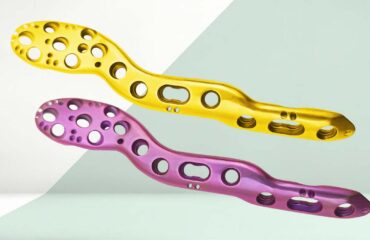
The PHILOS (Proximal Humerus Internal Locking System) Plate is specifically designed for fractures of the proximal humerus.
These fractures are common among elderly patients and individuals with osteoporosis.
Features
- Multiple locking screw options
- Anatomical contour
- Low-profile design
- High angular stability
Clinical Applications
Used primarily for:
- Proximal humerus fractures
- Three-part fractures
- Four-part fractures
- Osteoporotic shoulder fractures
Benefits
- Excellent fixation in weak bone
- Improved shoulder stability
- Early rehabilitation
- Reduced implant failure
Distal Radius Plate
Distal radius fractures are among the most common upper limb injuries.
The Distal Radius Plate is specially designed to restore wrist anatomy while allowing early motion.
Features
- Anatomical fit
- Locking screw technology
- Low-profile design
- Volar placement
Clinical Uses
Ideal for:
- Distal radius fractures
- Intra-articular fractures
- Comminuted fractures
- Osteoporotic fractures
Benefits
- Restores wrist alignment
- Stable fixation
- Faster functional recovery
- Reduced complication rates
Distal Femur Plate
The Distal Femur Plate is designed for fractures occurring near the knee joint.
These injuries often result from high-energy trauma or falls in elderly patients.
Features
- Anatomically shaped
- Multiple locking screw options
- High mechanical strength
- Angular stability
Clinical Applications
Used for:
- Distal femoral fractures
- Supracondylar fractures
- Periprosthetic fractures
- Complex fractures
Benefits
- Strong fixation
- Excellent alignment
- Supports early mobilization
- Suitable for osteoporotic bone
Proximal Tibia Plate
The Proximal Tibia Plate is used to stabilize fractures affecting the upper portion of the tibia near the knee.
These fractures frequently involve the tibial plateau and require precise reconstruction.
Features
- Anatomical contour
- Locking technology
- Low-profile implant
- Multiple screw trajectories
Clinical Applications
Used for:
- Tibial plateau fractures
- Proximal tibia fractures
- Complex intra-articular fractures
- Osteoporotic fractures
Benefits
- Restores joint alignment
- Prevents collapse
- Provides rigid fixation
- Supports early knee movement
Clinical Applications of Bone Plates
Bone plates are used across nearly every subspecialty of orthopaedic trauma surgery.
Common indications include:
Upper Limb
- Clavicle fractures
- Humerus fractures
- Radius fractures
- Ulna fractures
- Wrist fractures
Lower Limb
- Femur fractures
- Tibia fractures
- Fibula fractures
- Ankle fractures
- Tibial plateau fractures
Pelvic Surgery
Bone plates help stabilize:
- Pelvic ring injuries
- Acetabular fractures
Shoulder Surgery
Used for:
- Proximal humerus fractures
- Clavicle fractures
- Scapular fractures
Complex Trauma
Bone plates are essential for:
- Comminuted fractures
- Multi-fragment fractures
- Open fractures
- Non-union treatment
- Corrective osteotomy
Advantages of Bone Plates Over Traditional Fixation
Modern bone plating systems provide several advantages compared with traditional methods such as casting, traction, or simple external immobilization.
Superior Stability
- Bone plates provide rigid internal fixation that keeps fractured bone fragments securely aligned during healing.
Accurate Anatomical Reduction
- Proper alignment helps restore normal bone shape and joint function, reducing the risk of deformity.
Early Mobilization
- Stable fixation often allows patients to begin controlled movement earlier, helping to reduce joint stiffness and muscle wasting.
Faster Rehabilitation
- Patients can generally start physiotherapy sooner than those managed with prolonged immobilization, supporting a quicker return to daily activities.
Improved Healing Environment
- Stable fixation minimizes excessive movement at the fracture site while preserving biological conditions that support bone repair.
Reduced Risk of Malunion
- Maintaining correct alignment lowers the likelihood of bones healing in an improper position.
Better Outcomes in Complex Fractures
- Modern locking plates are particularly effective for comminuted, periarticular, and osteoporotic fractures where conventional fixation may be less reliable.
Post-Operative Recovery After Bone Plate Surgery
Recovery varies depending on the fracture location, the type of plate used, the patient’s age, and overall health.
Immediately After Surgery
Patients are closely monitored for:
- Pain management
- Swelling
- Wound condition
- Circulation and nerve function
Early movement of nearby joints is often encouraged when appropriate.
Physiotherapy
A structured rehabilitation program may include:
- Gentle range-of-motion exercises
- Muscle strengthening
- Balance and coordination training
- Gradual weight-bearing as directed by the surgeon
- Functional activity training
Healing Timeline
Although healing differs for each patient, a general guide is:
- First 2 weeks: Wound healing and pain reduction
- 6–8 weeks: Early bone healing becomes evident on imaging
- 3–6 months: Significant recovery of strength and function for many fractures
- 6–12 months: Ongoing bone remodeling and continued improvement
Your surgeon will determine when it is safe to increase activity based on clinical examination and follow-up X-rays.
Follow-Up Care
Regular appointments are important to:
- Monitor bone healing
- Check implant position
- Evaluate joint mobility
- Adjust rehabilitation as needed
- Identify any complications early
Are Bone Plates Permanent?
In many cases, bone plates can remain in the body permanently without causing problems. Removal is not routinely required if the implant is functioning well and the patient has no symptoms.
However, a surgeon may recommend removal in selected situations, such as:
- Persistent implant-related pain or irritation
- Infection involving the implant
- Hardware prominence beneath the skin
- Implant failure or loosening
- Specific clinical needs, particularly in younger patients
The decision to remove a plate is individualized and should be made after consultation with an orthopaedic surgeon.
Conclusion
Bone plates are a cornerstone of modern fracture fixation, providing stable internal support that enables accurate bone alignment and promotes successful healing. From Locking Compression Plates (LCPs) and Dynamic Compression Plates (DCPs) to specialized implants such as PHILOS Plates, Distal Radius Plates, Distal Femur Plates, and Proximal Tibia Plates, each design serves a specific purpose in managing different fracture patterns.
With advances in implant materials, anatomical designs, and locking technology, bone plates have significantly improved surgical outcomes, allowing earlier rehabilitation, better functional recovery, and reliable fixation even in challenging fractures. When combined with appropriate surgical technique, rehabilitation, and follow-up care, these implants play a vital role in helping patients return to their daily lives with restored strength, stability, and mobility.