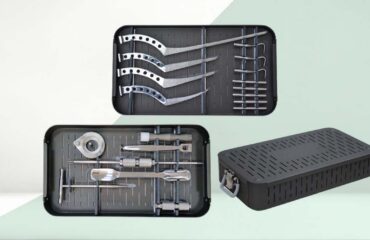


Hip fractures are among the most common orthopedic injuries, especially in elderly patients suffering from osteoporosis or reduced bone density. Timely surgical intervention is crucial to restore mobility, reduce pain, and improve the patient’s quality of life. Among the various Orthopaedic implants available today, the Thompson hip prosthesis has remained a reliable and widely used implant for hemiarthroplasty procedures. Its simple design, proven clinical performance, and durability make it one of the preferred choices for treating displaced fractures of the femoral neck.
Over the years, advancements in implant technology have introduced multiple prosthesis designs to suit different patient anatomies and surgical requirements. Products such as Thompson hip prostheses standard stem, thompson hip prostheses long neck, austin moore hip prostheses standard stem, austin moore hip prostheses extra-long stem, bipolar hip prostheses, lazcano hip prostheses, and shoulder prostheses continue to play an important role in modern orthopedic surgery.
What Is a Thompson Hip Prosthesis?
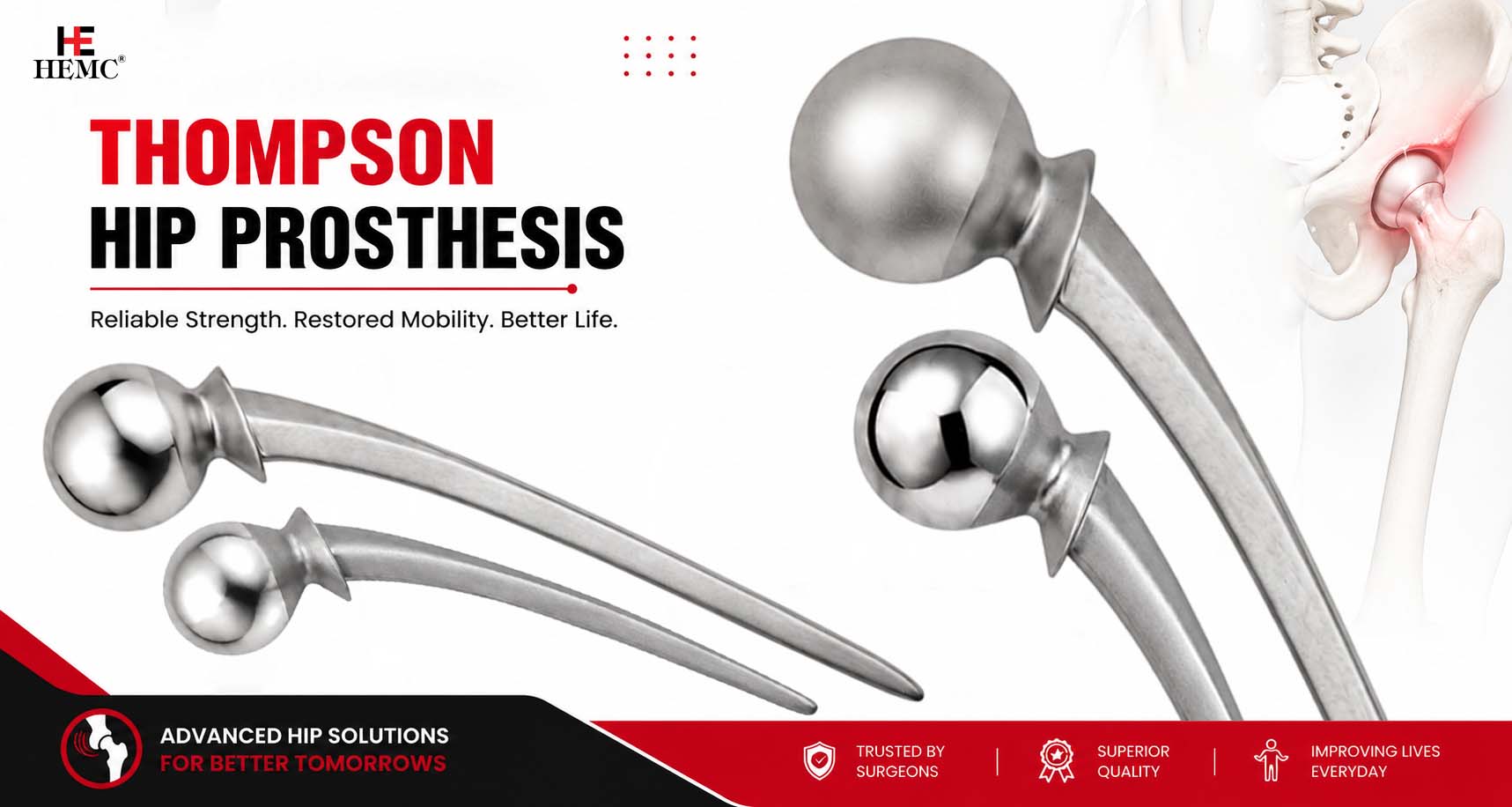
A Thompson hip prosthesis is a monoblock femoral implant designed for hemiarthroplasty. It replaces the femoral head while leaving the patient’s natural acetabulum intact. The implant is primarily indicated for elderly patients with displaced intracapsular fractures of the femoral neck where preserving the native femoral head is not feasible.
Unlike total hip replacement, hemiarthroplasty is generally less invasive, requires shorter operative time, and allows early mobilization. This makes the Thompson prosthesis particularly valuable for elderly patients with limited physiological reserves.
Manufactured from high-quality stainless steel, the prosthesis provides excellent strength, corrosion resistance, and long-term durability.
Evolution of Hip Prostheses
Hip replacement technology has evolved significantly over the past several decades. Early prostheses were relatively simple in design but offered remarkable improvements in pain relief and patient mobility.
Today, orthopedic surgeons can choose from various implant designs based on:
- Patient age
- Bone quality
- Femoral anatomy
- Activity level
- Type of fracture
- Surgical preference
Modern Hip implants include:
- Thompson Prosthesis
- Austin Moore Prosthesis
- Bipolar Prosthesis
- Cemented Hip Prosthesis
- Cementless Hip Prosthesis
- Modular Hip Systems
Each implant serves a specific purpose depending on clinical indications.
Thompson Hip Prostheses Standard Stem Stainless Steel
One of the most commonly used implants is the Thompson hip prostheses standard stem stainless steel.
Key Features
- High-grade stainless steel construction
- Anatomically designed stem
- Smooth polished surface
- Strong femoral fixation
- Excellent load transmission
- Long-lasting mechanical strength
The standard stem design is suitable for patients with normal femoral canal anatomy and provides dependable fixation with or without bone cement.
Its polished finish reduces tissue irritation while enhancing implant longevity.
Thompson Hip Prostheses Long Neck S.S.
Certain patients require additional neck length to restore normal biomechanics after surgery.
The thompson hip prostheses long neck s.s offers:
- Improved limb length restoration
- Better soft tissue tension
- Enhanced joint stability
- Reduced risk of postoperative dislocation
- Improved gait mechanics
Long neck options allow surgeons to optimize hip biomechanics without compromising implant stability.
Thompson Hip Prostheses Long Stem S.S.
Patients with osteoporosis, previous fractures, or widened femoral canals may benefit from the Thompson Hip Prostheses Long Stem S.S.
Advantages include:
- Increased stem stability
- Better load distribution
- Greater fixation within the femoral canal
- Improved support in compromised bone
- Reduced implant loosening
Long stem implants are particularly useful in revision cases or patients with poor proximal bone stock.
Surgical Indications
Thompson prostheses are commonly indicated for:
- Displaced femoral neck fractures
- Elderly low-demand patients
- Osteoporotic fractures
- Failed internal fixation
- Femoral head collapse
- Selected revision procedures
They are generally recommended when preserving the natural femoral head is not practical.
Surgical Procedure
Implantation involves several important steps:
Preoperative Planning
The surgeon evaluates:
- X-rays
- Femoral canal size
- Limb length
- Neck offset
- Patient anatomy
Femoral Head Removal
The fractured femoral head is carefully removed.
Canal Preparation
The femoral canal is broached and prepared for prosthesis insertion.
Implant Selection
Depending on anatomy, the surgeon selects:
- Standard stem
- Long neck
- Long stem
Implant Fixation
The prosthesis may be inserted:
- Cemented
- Cementless (selected cases)
Reduction
The implant head is reduced into the acetabulum and stability is confirmed.
Advantages of Thompson Hip Prosthesis
The popularity of Thompson prostheses stems from several clinical benefits.
Reliable Pain Relief
- Replacement of the damaged femoral head significantly reduces pain.
Early Mobilization
- Patients often begin rehabilitation within days after surgery.
Simple Surgical Technique
- The implant is easier to insert than modular total hip systems.
Lower Surgical Time
- Reduced operative duration benefits elderly patients.
Proven Clinical Performance
- Decades of successful use have established its reliability.
Durable Stainless Steel Construction
- High mechanical strength ensures long service life.
Austin Moore Hip Prostheses Standard Stem S.S.
The austin moore hip prostheses standard stem s.s. remains another widely recognized hemiarthroplasty implant.
Unlike Thompson prostheses, Austin Moore implants feature a fenestrated stem that encourages bone ingrowth.
Common indications include:
- Femoral neck fractures
- Elderly patients
- Low-demand individuals
Advantages include:
- Biological fixation
- Proven clinical history
- Excellent strength
- Reliable performance
Both Thompson and Austin Moore prostheses continue to be valuable options depending on surgeon preference and patient anatomy.
Austin Moore Hip Prostheses Extra-Long Stem Stainless Steel
Complex fractures or revision procedures may require additional femoral support.
The austin moore hip prostheses extra-long stem stainless steel provides:
- Greater distal fixation
- Improved stability
- Better load transfer
- Enhanced support in osteoporotic bone
Extra-long stems reduce the likelihood of loosening in compromised femurs.
Bipolar Hip Prostheses Non-Fenestrated Stainless Steel
The bipolar hip prostheses non-fenestrated stainless steel represents a significant advancement over traditional hemiarthroplasty implants.
Unlike monoblock prostheses, bipolar implants feature two articulating surfaces:
- Inner articulation
- Outer articulation
Benefits include:
- Reduced acetabular wear
- Improved range of motion
- Better joint mechanics
- Lower dislocation rates
- Increased patient comfort
These implants are commonly selected for more active elderly patients.
Lazcano Hip Prostheses Narrow Stem S.S.
Patients with narrow femoral canals require specialized implants.
The lazcano hip prostheses narrow stem s.s. is designed specifically for such cases.
Advantages include:
- Better anatomical fit
- Reduced cortical stress
- Easier insertion
- Improved stability
- Lower risk of intraoperative fracture
Its narrow profile accommodates smaller femoral anatomy while maintaining mechanical strength.
Stainless Steel in Orthopaedic Implants
Stainless steel remains one of the most trusted materials used in Orthopaedic implants.
Its popularity is due to:
- Excellent corrosion resistance
- High tensile strength
- Cost-effectiveness
- Easy manufacturing
- Long-term durability
- Biocompatibility
Although titanium alloys are increasingly used, stainless steel continues to perform exceptionally well in many trauma and reconstructive procedures.
Relationship with Other Hip Implants
Modern Hip implants encompass a wide range of prosthetic solutions, including:
- Thompson Prosthesis
- Austin Moore Prosthesis
- Bipolar Prosthesis
- Total Hip Replacement Systems
- Revision Hip Systems
- Cemented Femoral Components
- Cementless Femoral Components
Each implant addresses different clinical scenarios based on patient age, fracture type, bone quality, and activity level.
Integration with Other Orthopaedic Implants
Manufacturers producing Thompson prostheses often offer a comprehensive portfolio of Orthopaedic implants, including:
- Trauma implants
- Locking plates and screws
- Interlocking nails
- External fixators
- Maxillofacial implants
- Sports medicine implants
- Bone screws
- Intramedullary nails
These products enable orthopedic surgeons to manage fractures across virtually every anatomical region.
Role Alongside Spine Implants
Although hip prostheses and Spine Implants serve different clinical purposes, they share common design principles.
Both require:
- High biocompatibility
- Mechanical strength
- Precision engineering
- Corrosion resistance
- Long-term durability
- Anatomical compatibility
Manufacturers specializing in hip prostheses frequently produce Spine Implants such as pedicle screw systems, rods, cages, and spinal fixation devices, ensuring consistent quality across orthopedic product lines.
Shoulder Prostheses Stainless Steel
Many orthopedic manufacturers also produce shoulder prostheses stainless steel for treating severe shoulder arthritis, fractures, and joint degeneration.
These implants help restore:
- Shoulder movement
- Joint stability
- Pain-free function
- Upper limb mobility
Like hip prostheses, shoulder prostheses are manufactured with strict quality standards to ensure long-term clinical success.
Choosing the Right Hip Prosthesis
Selecting the ideal implant depends on multiple patient-specific factors, including:
- Age
- Bone quality
- Femoral canal anatomy
- Activity level
- Presence of osteoporosis
- Surgeon experience
- Expected postoperative mobility
For example:
- Thompson hip prostheses standard stem stainless steel is ideal for routine hemiarthroplasty.
- Thompson Hip Prostheses Long Neck S.S is selected when additional neck length is needed.
- Thompson hip prostheses long stem s.s. provides enhanced fixation in osteoporotic or revision cases.
- Austin moore hip prostheses standard stem s.s. offers an alternative monoblock design with a fenestrated stem.
- Austin Moore Hip Prostheses Extra-Long Stem Stainless Steel is preferred for extensive femoral support.
- Bipolar Hip Prostheses Non-Fenestrated Stainless Steel improves articulation and reduces acetabular wear.
- Lazcano hip prostheses narrow stem s.s. is well suited for patients with narrow femoral canals.
Future of Hip Prosthesis Technology
Orthopedic implant technology continues to evolve through innovations such as:
- Advanced biomaterials
- Improved surface polishing
- Enhanced anatomical designs
- Better fixation techniques
- Computer-assisted surgical planning
- Patient-specific instrumentation
- Robotic-assisted hip replacement
These advancements aim to improve implant longevity, reduce complications, and enhance patient outcomes.
Conclusion
The Thompson hip prosthesis remains one of the most dependable solutions for treating displaced femoral neck fractures, particularly in elderly patients requiring hemiarthroplasty. Its straightforward design, reliable fixation, and durable stainless steel construction have made it a trusted choice for orthopedic surgeons worldwide.
As part of the broader family of Orthopaedic implants, these prostheses complement other essential solutions such as Hip implants, Spine Implants, trauma fixation systems, and shoulder prostheses stainless steel. Together, these advanced implant technologies continue to improve surgical outcomes, restore mobility, relieve pain, and help patients return to active, independent lives with confidence.