


Paediatric orthopaedics presents unique challenges due to the continuous growth and development of a child’s skeletal system. Among the most critical areas requiring precise intervention is the hip joint, which plays a vital role in mobility, posture, and overall musculoskeletal health. Conditions such as developmental dysplasia of the hip (DDH), slipped capital femoral epiphysis (SCFE), fractures, and congenital deformities often necessitate surgical intervention using specialized fixation devices.
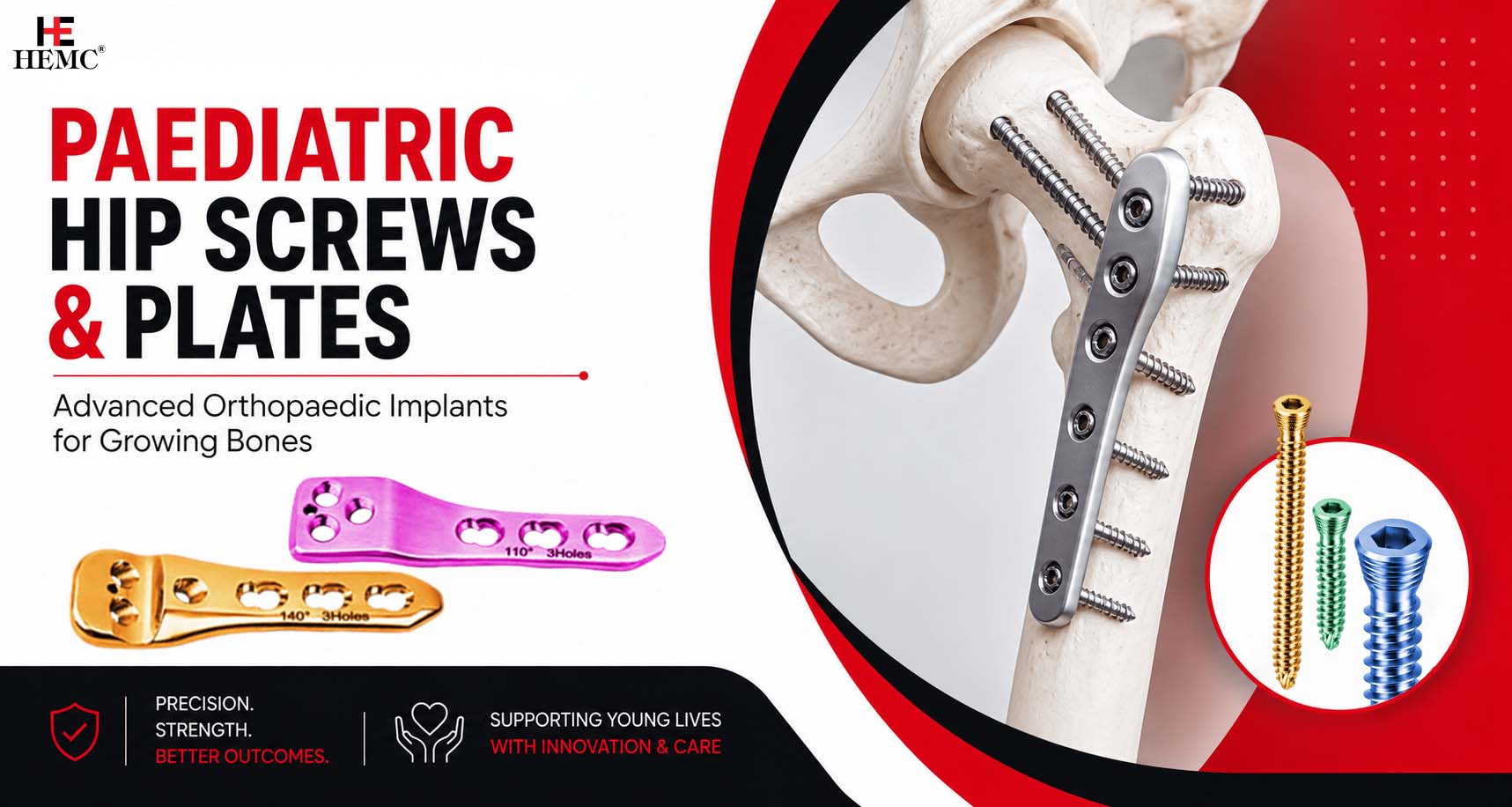
Paediatric hip screws and plates are essential orthopaedic implants designed specifically to stabilize fractures, correct deformities, and support proper bone alignment in children. Unlike adult implants, these devices must accommodate growth, reduce the risk of complications, and provide long-term functional outcomes. The integration of locking plates and screws has significantly improved surgical precision and stability, making them a cornerstone in modern paediatric orthopaedic procedures.
Understanding Paediatric Hip Anatomy and Challenges
The paediatric hip joint differs significantly from the adult hip due to the presence of growth plates (physes), softer bone structures, and ongoing skeletal development. These factors introduce complexities in both diagnosis and treatment.
Key Considerations:
Growth Plates: Vulnerable areas that must be preserved to avoid growth disturbances
Bone Elasticity: Pediatric bones are more flexible, requiring adaptable fixation
Remodeling Potential: Children have higher healing and remodeling capacity
Long-Term Impact: Improper fixation can lead to deformities or functional impairment
Because of these factors, paediatric hip screws and plates must be carefully designed to provide stability without interfering with natural growth.
What Are Paediatric Hip Screws & Plates?
Paediatric hip screws and plates are specialized orthopaedic implants used to fix fractures or stabilize the hip joint in children. These implants are smaller, more flexible, and tailored to accommodate the anatomical and physiological characteristics of pediatric patients.
Components:
- Hip Screws: Used to secure bone fragments or stabilize the femoral head
- Plates: Metal structures attached to the bone surface for added support
- Locking Mechanisms: Ensure screws remain fixed within the plate for enhanced stability
The integration of locking plates and screws allows for angular stability, reducing the risk of implant failure and improving healing outcomes.
Types of Paediatric Hip Screws and Plates
Cannulated Screws
- Cannulated screws are hollow, allowing them to be guided over a wire for precise placement. They are commonly used in conditions like SCFE.
Advantages:
- Minimally invasive insertion
- Accurate positioning
- Reduced surgical trauma
Locking Plates
Locking plates are advanced orthopaedic implants where screws lock into the plate, creating a fixed-angle construct.
Benefits of Locking Plates and Screws:
- Enhanced stability in weak or developing bones
- Reduced dependence on bone quality
- Lower risk of screw loosening
Dynamic Hip Screws (DHS)
- These are used for certain types of fractures and allow controlled compression at the fracture site.
Pediatric-Specific Plate Systems
- Custom-designed plates that match the anatomical contours of a child’s hip, ensuring better fit and reduced irritation.
Clinical Applications
Paediatric hip screws and plates are used in a wide range of conditions:
Developmental Dysplasia of the Hip (DDH)
- Surgical stabilization may require plates and screws to maintain proper joint alignment after corrective procedures.
Slipped Capital Femoral Epiphysis (SCFE)
- Cannulated screws are commonly used to stabilize the femoral head and prevent further slippage.
Femoral Neck Fractures
- These rare but serious injuries require precise fixation using locking plates and screws to ensure proper healing.
Congenital and Acquired Deformities
- Corrective osteotomies often involve the use of plates and screws to maintain bone alignment.
Trauma Cases
- Accidents or falls may lead to fractures requiring immediate surgical fixation with reliable orthopaedic implants.
Advantages of Locking Plates and Screws in Paediatric Hip Surgery
The introduction of locking plates and screws has revolutionized paediatric orthopaedics. These systems offer several advantages over traditional fixation methods:
Superior Stability
- Locking mechanisms create a rigid construct, reducing micro-movements at the fracture site.
Improved Healing
- Stable fixation promotes faster and more reliable bone healing.
Reduced Risk of Complications
- Lower chances of implant loosening, malunion, or non-union.
Minimal Bone Damage
- Less reliance on bone compression reduces damage to delicate pediatric bone structures.
Better Surgical Outcomes
- Enhanced precision leads to improved functional recovery and long-term results.
Material Innovations in Orthopaedic Implants
Modern paediatric hip screws and plates are made from advanced biomaterials that ensure safety, durability, and compatibility.
Common Materials:
- Titanium Alloys: Lightweight, corrosion-resistant, and biocompatible
- Stainless Steel: Strong and cost-effective
- Bioabsorbable Materials: Gradually dissolve, eliminating the need for removal surgery
These materials enhance the performance of orthopaedic implants, ensuring they meet the demanding requirements of pediatric care.
Surgical Techniques and Considerations
Successful implantation of paediatric hip screws and plates requires meticulous planning and execution.
Preoperative Planning:
- Imaging (X-rays, CT scans)
- Assessment of growth plates
- Selection of appropriate implant size
Intraoperative Techniques:
- Minimally invasive approaches
- Accurate screw placement
- Preservation of blood supply
Postoperative Care:
- Regular monitoring
- Physiotherapy
- Gradual weight-bearing
Challenges and Limitations
Despite advancements, there are still challenges associated with paediatric hip implants:
Growth Interference
- Improper placement may affect bone growth.
Implant Removal
- In some cases, implants must be removed after healing.
Risk of Infection
- As with any surgical procedure, infection remains a concern.
Cost Considerations
- Advanced locking plates and screws can be expensive, limiting accessibility in some regions.
Future Trends in Paediatric Orthopaedic Implants
The field of paediatric orthopaedics continues to evolve with new technologies and innovations.
3D-Printed Implants
- Custom-designed implants tailored to individual anatomy.
Smart Implants
- Sensors embedded in implants to monitor healing progress.
Biodegradable Fixation Devices
- Eliminate the need for secondary surgeries.
Robotic-Assisted Surgery
- Improves precision and reduces human error.
Advanced Coatings
- Antibacterial and osteoinductive coatings to enhance healing.
Role of Manufacturers and Quality Standards
Manufacturers of paediatric hip screws and plates must adhere to strict quality and safety standards. Certifications such as ISO and CE ensure that orthopaedic implants meet global benchmarks.
Key Factors:
- Precision engineering
- Sterilization standards
- Regulatory compliance
- Continuous research and development
Conclusion
Paediatric hip screws and plates play a critical role in the treatment of various hip-related conditions in children. As specialized orthopaedic implants, they are designed to address the unique challenges of pediatric anatomy while ensuring stability, safety, and optimal healing outcomes.
The integration of locking plates and screws has significantly enhanced the effectiveness of these implants, offering superior stability and improved surgical results. With ongoing advancements in materials, design, and surgical techniques, the future of paediatric orthopaedic care looks promising.
For healthcare providers, choosing the right implant system is essential to achieving successful outcomes. For manufacturers, continuous innovation and adherence to quality standards remain key to meeting the evolving demands of pediatric orthopaedics.
Ultimately, paediatric hip screws and plates are not just medical devices—they are vital tools that help restore mobility, improve quality of life, and ensure a healthier future for young patients.