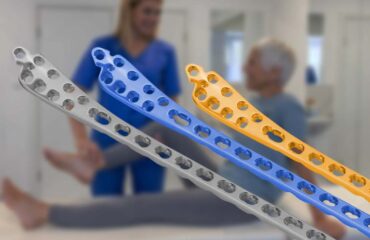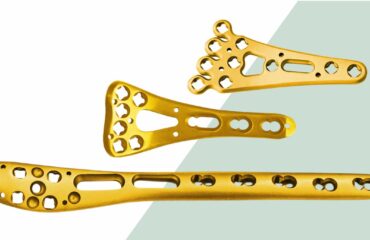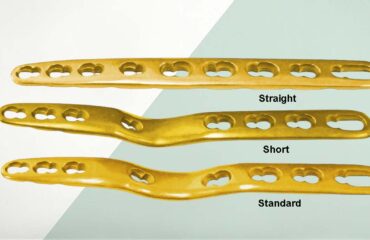


Orthopaedic surgery has witnessed remarkable advancements over the past few decades, driven by innovations in implant design, biomaterials, and surgical techniques. Among these developments, the introduction of locking screws has significantly improved the stability and effectiveness of fracture fixation systems. Today, locking screws are widely used in conjunction with locking plates, interlocking nails, spine implants, external fixators, and various other orthopaedic implants to enhance patient outcomes and accelerate recovery.
Conventional screws have served orthopaedic surgeons well for many years; however, they have certain limitations, particularly in osteoporotic bone, complex fractures, and high-load-bearing applications. Locking screw technology was developed to address these challenges by providing a more stable and reliable fixation mechanism.
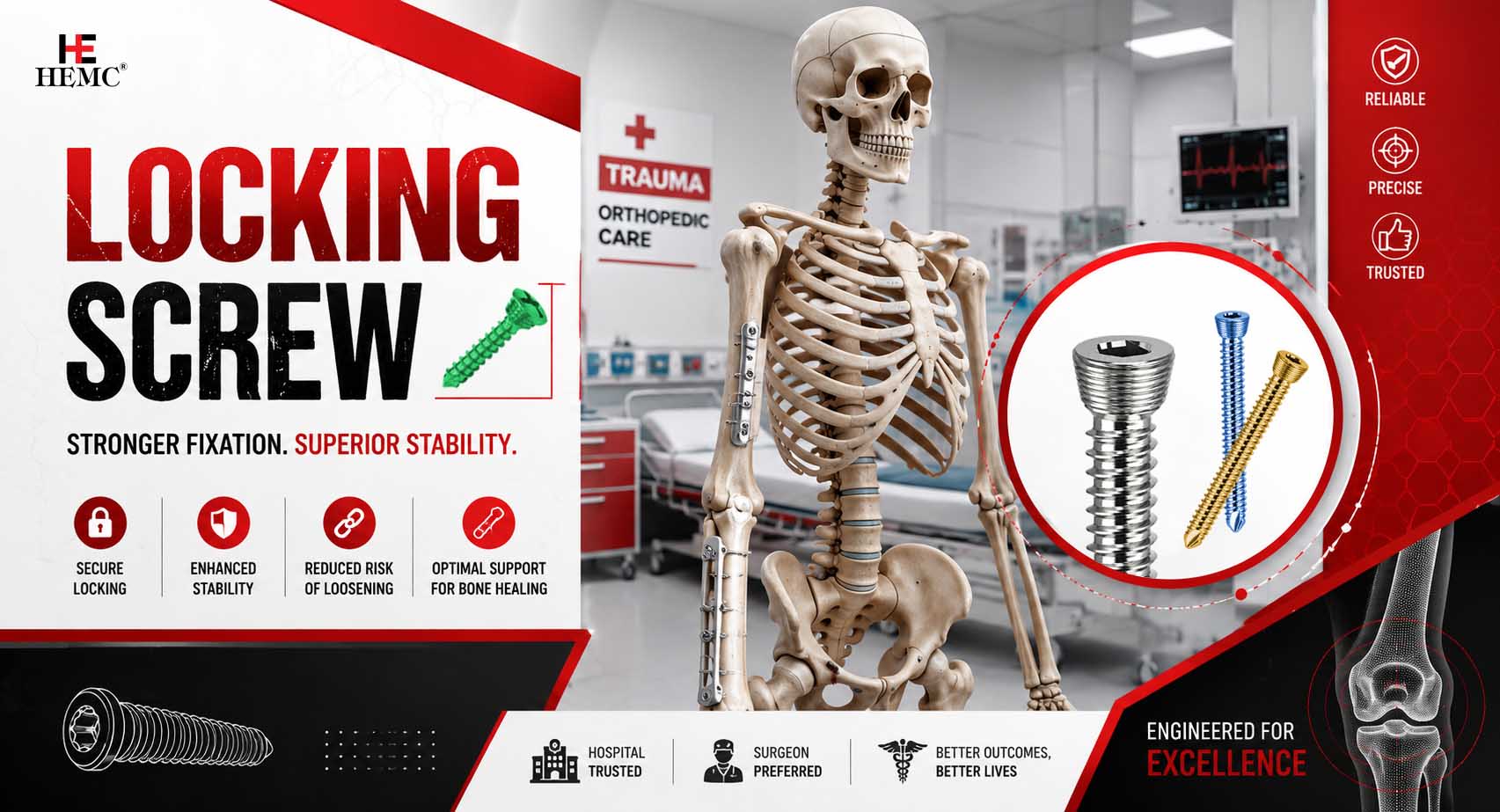
Understanding Locking Screws
A locking screw is a specialized orthopaedic screw designed to engage directly with a threaded hole in a locking plate or implant. Unlike conventional screws, which rely primarily on friction between the plate and bone for stability, locking screws create a fixed-angle construct by locking into the implant itself.
This locking mechanism transforms the plate and screws into a single, rigid framework capable of distributing forces more efficiently. The result is enhanced fixation stability, particularly in difficult clinical situations.
Locking screws are commonly used with:
- Locking plates
- Interlocking nails
- Spine implants
- Trauma fixation systems
- External fixators
- Hip prosthesis reconstruction procedures
- Periarticular fracture fixation systems
Conventional Screws: Limitations and Challenges
Traditional orthopaedic screws achieve stability by compressing the fixation plate against the bone surface. While this method can be effective, several limitations become apparent in complex cases.
Dependence on Bone Quality
- Conventional screws depend heavily on the strength and density of the surrounding bone. In patients with osteoporosis or poor bone quality, screw loosening and pull-out can occur more frequently.
Loss of Fixation Stability
- Over time, repeated loading and physiological movements may reduce screw purchase, leading to instability and delayed healing.
Plate-to-Bone Compression Issues
- Excessive compression between the plate and bone may compromise local blood supply, potentially affecting fracture healing.
Reduced Performance in Complex Fractures
- Multi-fragmentary and periarticular fractures often present fixation challenges that conventional screw systems may struggle to address effectively.
These limitations paved the way for the development of advanced locking screw technology.
Major Advantages of Locking Screws
Superior Angular Stability
One of the most significant advantages of locking screws is angular stability.
When the screw head locks into the threaded plate hole, it creates a fixed-angle construct. Unlike conventional screws, which can change orientation under load, locking screws maintain their angle and position.
Benefits include:
- Increased mechanical stability
- Reduced risk of screw loosening
- Better fixation in unstable fractures
- Enhanced resistance to rotational forces
This fixed-angle support is particularly beneficial in metaphyseal and periarticular fractures where maintaining alignment is critical.
Improved Performance in Osteoporotic Bone
Osteoporosis presents one of the greatest challenges in orthopaedic surgery. Poor bone density often reduces screw holding strength.
Locking screws provide an effective solution because fixation does not rely solely on bone compression. The plate-screw interface contributes significantly to construct stability.
Advantages in osteoporotic patients include:
Better load distribution
- Reduced risk of screw pull-out
- Enhanced fracture stabilization
- Improved healing conditions
As global populations age, locking screw systems continue to play an increasingly important role in geriatric fracture management.
Preservation of Blood Supply
Conventional plating techniques often require the plate to be compressed tightly against the bone surface.
Locking plates and locking screws allow for less plate-to-bone contact, helping preserve periosteal blood circulation.
Benefits include:
- Enhanced biological healing
- Reduced soft tissue disruption
- Lower risk of bone necrosis
- Faster recovery potential
Modern orthopaedic treatment increasingly emphasizes biological fixation, making locking screw systems highly valuable.
Enhanced Fixation in Complex Fractures
Complex fractures involving multiple fragments often require highly stable fixation constructs.
Locking screws offer several advantages:
- Improved fragment control
- Greater structural rigidity
- Reduced collapse risk
- Better maintenance of alignment
This makes them particularly useful in:
- Distal femur fractures
- Proximal humerus fractures
- Tibial plateau fractures
- Distal radius fractures
The ability to stabilize small bone fragments significantly improves surgical outcomes.
Reduced Risk of Implant Failure
Implant failure can occur due to excessive stress concentration, screw loosening, or loss of reduction.
The rigid fixed-angle structure created by locking screws distributes mechanical loads more evenly throughout the implant system.
As a result:
- Stress concentration decreases
- Fatigue resistance improves
- Construct durability increases
- Implant longevity is enhanced
These advantages contribute to fewer revision surgeries and improved patient satisfaction.
Better Load Sharing and Force Distribution
Traditional screw systems transfer forces differently compared to locking systems.
In locking constructs:
- Loads are distributed through the entire plate-screw framework.
- Individual screws experience less stress.
- The overall construct functions as a unified support system.
These improved biomechanics contributes to:
- Greater stability
- Lower complication rates
- Enhanced fracture healing conditions
Increased Accuracy During Surgical Procedures
Modern locking screw systems are designed to work with advanced instrumentation and guided drilling techniques.
Surgeons benefit from:
- Improved screw placement accuracy
- Better alignment control
- Reduced operative complexity
- Consistent fixation quality
Many contemporary orthopaedic implants feature dedicated instrumentation systems that optimize locking screw insertion and positioning.
Applications of Locking Screws in Orthopaedic Implant Systems
Locking Plates
Locking plates represent the most common application of locking screw technology.
The combination of locking plates and locking screws creates highly stable fixation constructs suitable for:
- Long bone fractures
- Periarticular fractures
- Osteoporotic fractures
- Trauma reconstruction procedures
Their popularity continues to grow due to predictable clinical outcomes and improved fracture healing rates.
Interlocking Nails
Interlocking nails are widely used for intramedullary fixation of long bone fractures.
Locking screws play a critical role by:
- Preventing rotational movement
- Maintaining axial alignment
- Enhancing overall nail stability
In femoral and tibial fracture treatment, locking screws help ensure proper fracture reduction throughout the healing process.
Spine Implants
Modern spine implants frequently incorporate locking screw mechanisms.
Applications include:
- Spinal fusion procedures
- Vertebral stabilization
- Deformity correction surgeries
- Trauma management
The fixed-angle stability provided by locking screws helps maintain spinal alignment while promoting successful fusion.
External Fixators
External fixators are often used in trauma and limb reconstruction procedures.
Advanced locking screw systems improve:
- Frame stability
- Pin fixation strength
- Load transfer efficiency
This contributes to improved outcomes in complex orthopaedic trauma cases.
Hip Prosthesis and Revision Surgery
In hip prosthesis reconstruction and revision procedures, locking screws are frequently used to secure fixation plates and supporting implant structures.
Benefits include:
- Enhanced implant support
- Improved bone fixation
- Better management of periprosthetic fractures
- Increased construct stability
As hip replacement procedures continue to increase worldwide, locking screw technology remains an important component of revision surgery strategies.
Biomechanical Advantages of Locking Screw Technology
From a biomechanical perspective, locking screws offer several distinct advantages over conventional fixation methods.
Fixed-Angle Stability
- The screw-plate interface forms a stable geometric structure that resists displacement.
Resistance to Toggle
- Traditional screws may experience micro-movement within the bone.
- Locking screws minimize this effect by maintaining rigid connection with the implant.
Improved Fatigue Strength
- Repeated loading cycles place significant demands on orthopaedic implants.
- Locking constructs demonstrate improved fatigue resistance, reducing the likelihood of mechanical failure.
Better Alignment Retention
- Maintaining anatomical alignment is essential for successful fracture healing.
- Locking systems help preserve reduction even under challenging loading conditions.
Future Developments in Locking Screw Systems
Orthopaedic implant manufacturers continue to innovate and improve locking screw technology.
Emerging trends include:
- Variable-angle locking systems
- Hybrid fixation constructs
- Low-profile implant designs
- Advanced titanium and stainless-steel materials
- Smart implant monitoring technologies
- Patient-specific orthopaedic solutions
Future locking screw systems are expected to offer even greater precision, stability, and biological compatibility.
Conclusion
Locking screws have revolutionized orthopaedic fracture fixation by overcoming many of the limitations associated with conventional screw systems. Their ability to provide fixed-angle stability, improved load distribution, enhanced performance in osteoporotic bone, and superior fracture fixation has made them a cornerstone of modern orthopaedic surgery.
Whether used with locking plates, interlocking nails, spine implants, external fixators, or hip prosthesis reconstruction systems, locking screws deliver significant biomechanical and clinical advantages. As orthopaedic technology continues to evolve, these advanced fixation solutions will remain integral to the success of next-generation orthopaedic implants.
For surgeons, healthcare providers, and implant manufacturers alike, locking screw technology represents a major step forward in achieving stronger fixation, faster healing, and better patient outcomes.