

HEMC Ortho

  • Home
  • About
  • Products
    • Locking Screws, Plates & Instruments
    • Variable Angle Screws & Plates
    • Cable Plating System
    • Interlocking Nails & Instruments
    • Nails
    • Wire & Pins
    • Spine Implants & Instruments
    • Pelvic Screws & Plates
    • Hip Implants & Instruments
    • Paediatric Hip Screws & Plates
    • Hip Prosthesis
    • Mini Fragment Implants & Instruments
    • Hand & Foot Screws & Plates
    • Small Fragment Implants & Instruments
    • Large Fragment Implants & Instruments
    • Cannulated Screws
    • Headless Compression Screws, Cannulated
    • Maxillo Facial Implants & Instruments
    • Arthroscope
    • External Fixators
    • General Instruments
  • Product

    Hospital Equipment Manufacturing Company

    • Locking Screws, Plates & Instruments
    • Pelvic Screws & Plates
    • Large Fragment Implants & Instruments
    • Variable Angle Screws & Plates
    • Hip Implants & Instruments
    • Cannulated Screws
    • Cable Plating System
    • Paediatric Hip Screws & Plates
    • Headless Compression Screws, Cannulated
    • Interlocking Nails & Instruments
    • Hip Prosthesis
    • Maxillofacial Implants & Instruments
    • Nails
    • Mini Fragment Implants & Instruments
    • Arthroscope
    • Wire & Pins
    • Hand & Foot Screws & Plates
    • External Fixators
    • Spine Implants & Instruments
    • Small Fragment Implants
    • General Instruments
  • Events
  • Jobs
  • Vendor Registration
  • Videos
  • Blog
  • Contact
WhatsApp
+91 83682 81897
WhatsApp
+91 83682 81897
  • Home
  • Blog
  • Maxillofacial Implants
  • How is maxillofacial implant surgery performed?

How is maxillofacial implant surgery performed?

by hemcortho / Saturday, 22 June 2024 / Published in Maxillofacial Implants
Maxillofacial Implant Surgery

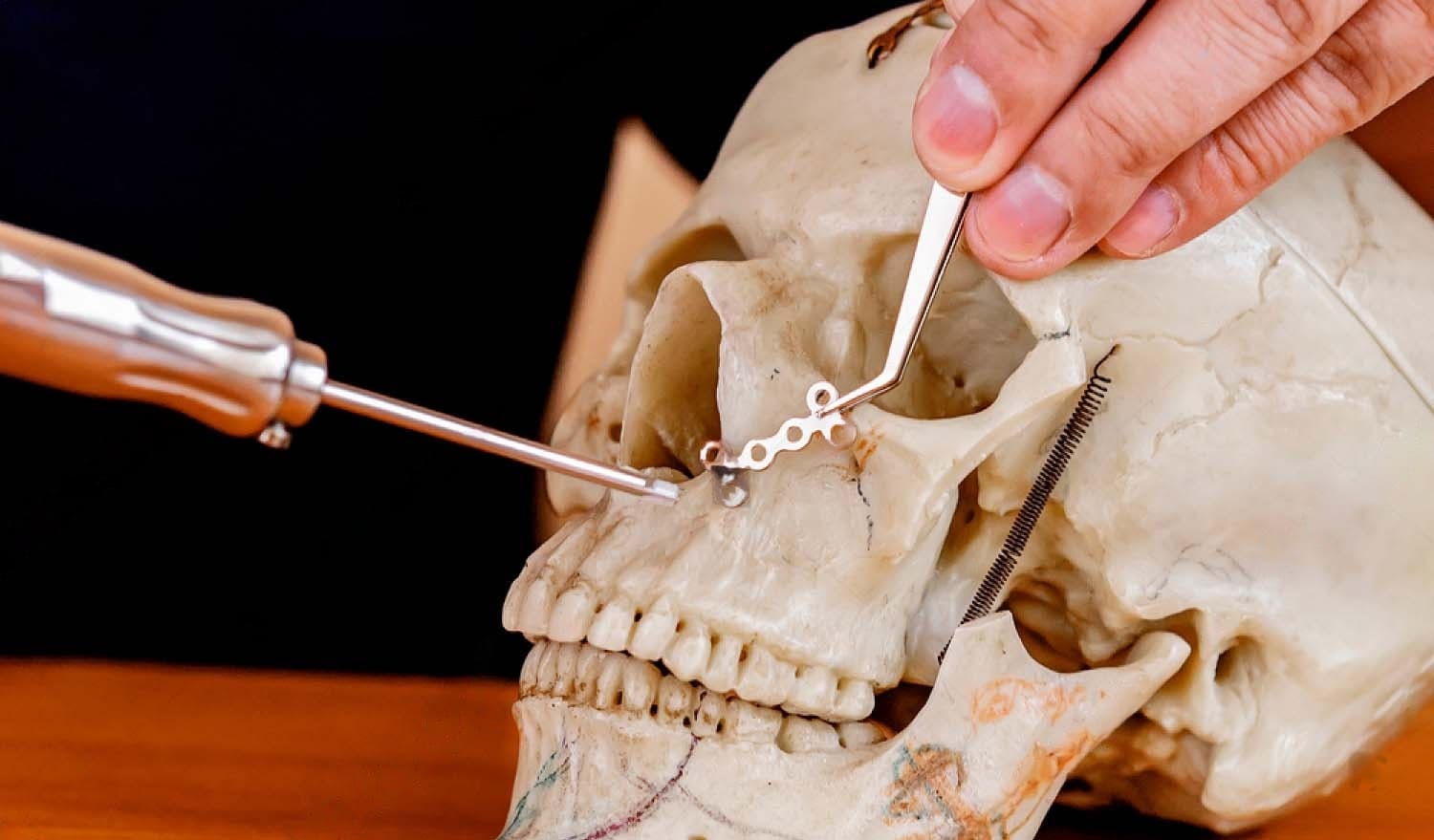
Maxillofacial implant surgery is a specialized area of surgery that involves the use of implants to reconstruct or repair structures in the maxillofacial region, which includes the jaws, face, and skull. This type of surgery is performed by maxillofacial surgeons, who are trained in both dentistry and surgery, and is used to address a variety of conditions, such as congenital defects, trauma, tumors, and other pathologies affecting the facial skeleton.


Key Aspects of Maxillofacial Implant Surgery

Dental Implants

  • Purpose: Replace missing teeth.
  • Procedure: Involves placing a titanium or zirconia implant into the jawbone, which acts as an artificial tooth root. Once the implant integrates with the bone (osseointegration), a prosthetic tooth (crown) is attached.
  • Benefits: Improved aesthetics, function, and oral health.

Reconstructive Implants

  • Purpose: Restore facial structures damaged by trauma, surgery (e.g., tumor resection), or congenital defects.
  • Procedure: May involve bone grafting and the use of custom-made implants to reconstruct the affected area.
  • Benefits: Restoration of normal appearance and function, improvement in quality of life.

Orthognathic Surgery Implants

  • Purpose: Correct jaw deformities and malocclusions.
  • Procedure: Involves repositioning the jaws using plates, screws, and sometimes bone grafts. This can correct issues such as underbite, overbite, and asymmetry.
  • Benefits: Improved bite function, facial aesthetics, and sometimes breathing and speech.

Orbital and Cranial Implants

  • Purpose: Repair defects in the eye socket (orbit) and skull.
  • Procedure: Custom implants are used to reconstruct the bony orbit or cranium, often following trauma or surgery for tumors.
  • Benefits: Restoration of the normal appearance and protection of the brain and eye structures.

Facial Prosthetics

  • Purpose: Replace missing facial features such as eyes, ears, or noses.
  • Procedure: Involves attaching prosthetic parts using implants for support, often combined with reconstructive surgery.
  • Benefits: Improved aesthetics and psychological well-being.

Indications for Maxillofacial Implant Surgery

  • Trauma: Fractures of the facial bones, including the jaw, cheekbones, and orbital bones.
  • Oncologic Surgery: Reconstruction following the removal of tumors in the maxillofacial region.
  • Congenital Anomalies: Conditions such as cleft lip and palate, and other craniofacial syndromes.
  • Edentulism: Replacement of multiple missing teeth, especially in patients with significant bone loss.
  • Aesthetic Corrections: Procedures to improve facial symmetry and appearance.

Surgical Procedure

Pre-Surgical Planning

  • Detailed imaging (CT scans, MRI) and virtual surgical planning.
  • Creation of custom implants using 3D printing technology.

Surgery

  • Performed under general or local anesthesia.
  • Involves precise placement of implants and may require bone grafting.
  • Duration varies depending on the complexity of the case.

Post-Surgical Care

  • Monitoring for infection and ensuring proper healing.
  • Follow-up visits for adjustments and rehabilitation.
  • Instructions on oral hygiene and care of the surgical site.

Risks and Complications

  • Infection: Potential risk at the surgical site.
  • Implant Failure: Rare, but can occur due to poor integration or mechanical failure.
  • Nerve Damage: Possible, leading to numbness or pain.
  • Aesthetic Concerns: Need for revision surgery if the initial outcome is not satisfactory.

Conclusion

Maxillofacial implant surgery is a highly specialized field that offers significant benefits for patients with a variety of conditions affecting the facial region. By using advanced techniques and custom implants, maxillofacial surgeons can restore function, appearance, and improve the quality of life for their patients.
Tagged under: maxillofacial implant, Maxillofacial Implants India

What you can read next

Multi-Guided Mandibular Distractor
Multi-Guided Mandibular Distractor – Key Features and Benefits
Maxillofacial Implants India – Treat Complex Facial Bone Injuries With Perfection
Maxillofacial Surgery Vs Craniofacial Surgery
How Does Maxillofacial Surgery Differ from Craniofacial Surgery?

You must be logged in to post a comment.

RECENT

  • Secure Locking Plates

    Top Secure Locking Plates Manufacturer in India | HEMC Ortho Global Exporter

    Orthopaedic trauma care has advanced significan...
  • Orthopaedic Implants

    Top Orthopaedic Implants Manufacturer in India | HEMC Ortho

    Introduction Orthopaedic health is one of the m...
  • Hip Implants

    HEMC Ortho: Leading Hip Implant Manufacturer and Exporter in India

    HEMC Ortho: Overview HEMC (Hospital Equipment M...
  • External Fixators

    External Fixators India – Perfect Solution to External Bone Fractures

    External fixators are a highly effective and wi...
  • INSTRUMENT SET FOR FEMUR NAIL

    Femur Nail Instrument Set – Complete Overview

    A Femur Nail Instrument Set is a specialized co...

Hospital Equipment Manufacturing Company

HEMC Ortho is India’s most trusted manufacturer and exporter of orthopedic implants & Instruments. We are an ISO 13485:2016, ISO 9001:2015, WHO-GMP, CE & FDA certified company in India. Our huge range of products includes Locking plates & Screw, Interlocking Screw & Nails, External Fixators, Spine Implants, Mini Fragment Set, Hip Prosthesis, General Instruments, etc.

LINKS

  • Home
  • About
  • Products
  • Product
  • Events
  • Jobs
  • Vendor Registration
  • Videos
  • Blog
  • Contact
  • Home
  • About
  • Products
  • Product
  • Events
  • Jobs
  • Vendor Registration
  • Videos
  • Blog
  • Contact

CONTACT

Hospital Equipment Mfg. Co.

D-313, Sector 63, Noida, U.P. 201301, India

+91 120 4088 888

info@hemcmedical.com

© 2025. Hospital Equipment Manufacturing Company, All rights reserved.

TOP