


Bone injuries can often be complex, requiring innovative medical solutions to ensure effective healing and long-term stability. While internal fixation devices such as plates, screws, and prostheses play an essential role in orthopaedic surgery, there are many situations where external fixators are the most reliable choice. These specialized systems stabilize fractured bones from outside the body, making them invaluable for treating severe trauma, deformity corrections, infections, and complicated fractures.
This blog explores the role of external fixators, their benefits, applications, and how they compare with other orthopaedic implants such as hip prosthesis, hip implants, cannulated screws, headless screws, spine implants, locking plates, general instruments, and ACL-PCL implants.
Understanding External Fixators
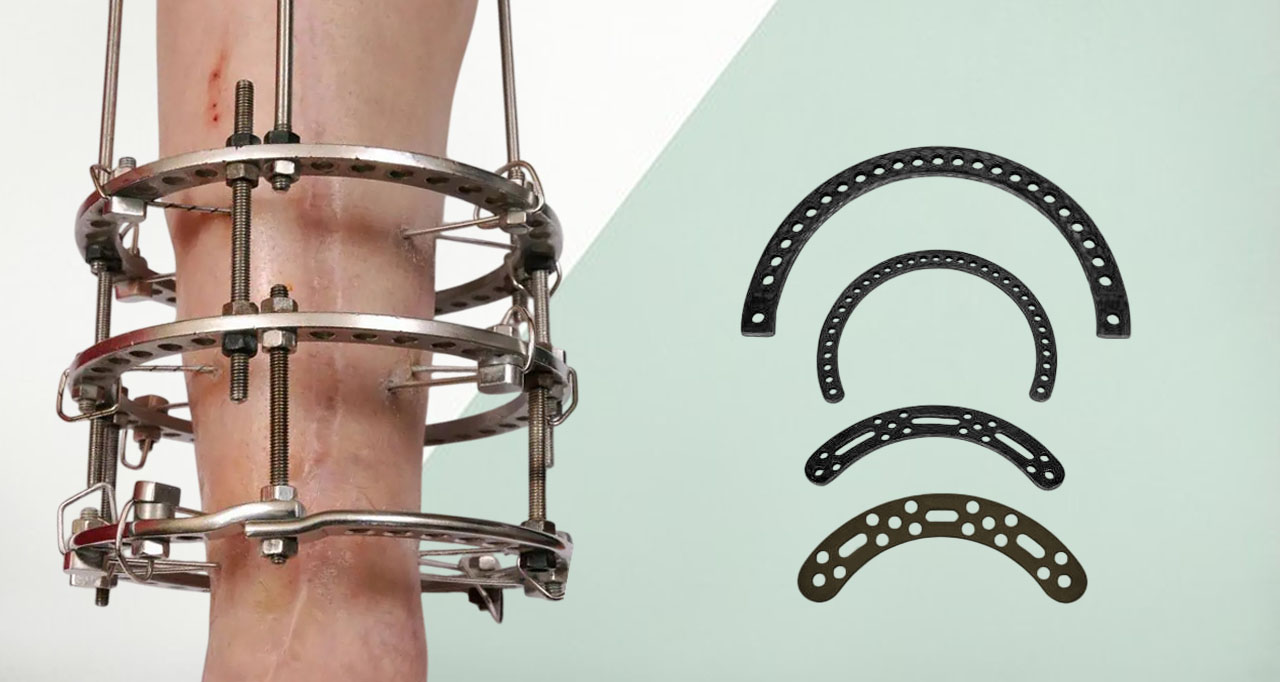
An external fixator is a surgical device used to stabilize bone and soft tissues at a distance from the site of the injury. It involves pins or wires inserted into the bone and connected to an external frame outside the body. This external system holds the bones in proper alignment until healing is achieved.
External fixators are especially useful in:
- Open fractures where internal implants are risky due to infection
- Severe trauma injuries with extensive soft tissue damage
- Bone lengthening procedures
- Correction of deformities such as angular or rotational misalignments
- Infected fractures where internal fixation is contraindicated
Benefits of External Fixators
External fixators offer several advantages in orthopaedic care:
Minimally Invasive Approach
- They reduce the need for large surgical incisions, protecting soft tissue and blood supply around the fracture.
Versatility
- They can be adjusted externally to gradually correct deformities or lengthen bones during recovery.
Reduced Risk of Deep Infection
- Since the implant does not sit inside the fracture site, it decreases the risk of deep bone infections in contaminated wounds.
Customizability
- Surgeons can tailor fixator frames according to the patient’s specific bone structure and injury.
Stability and Early Mobility
- With proper application, external fixators provide excellent stability and allow patients to begin rehabilitation earlier.
Types of External Fixators
Unilateral Fixators
- Used for straightforward fractures, these are placed on one side of the limb.
Circular Fixators (Ilizarov Systems)
- Widely used in complex fractures and deformity correction, they employ rings and wires for stabilization.
Hybrid Fixators
- Combining the principles of unilateral and circular systems, these are highly effective for periarticular fractures.
Rail Fixators
- A linear system used for bone transport and lengthening procedures.
Comparing External Fixators with Other Orthopaedic Implants
External fixators are part of the broader orthopaedic implant ecosystem. To better understand their role, it’s useful to compare them with other devices like hip prosthesis, hip implants, screws, and plates.
Hip Prosthesis and Hip Implants
- While hip prosthesis and hip implants are used in joint replacement surgeries for degenerative diseases or fractures, external fixators are temporary stabilizers used mainly in trauma or deformity cases. Both are vital, but they address different orthopaedic needs – prosthesis restores mobility in joints, while fixators secure fractured bones externally.
Cannulated Screws and Headless Screws
- Cannulated screws are hollow and allow precise placement over guide wires, commonly used in fractures like femoral neck fractures.
- Headless screws are designed for minimal prominence and are often used in small bone fixation. Both of these internal fixation devices differ from external fixators, but sometimes they are used sequentially – an external fixator may stabilize a fracture temporarily until screws are placed internally once the soft tissue heals.
Spine Implants
- Spinal surgeries use specialized implants such as pedicle screws, rods, and cages to stabilize the vertebral column. Unlike external fixators, spine implants are permanently placed inside the body. However, the precision and stability demanded are comparable, highlighting the technical excellence required in both implant categories.
Locking Plates
- Locking plates provide angular stability and are used for both simple and complex fractures. They offer strong internal fixation but require soft tissue exposure, unlike external fixators which stabilize fractures externally without disturbing the injury site directly.
General Instruments
- Every surgical procedure, whether involving external fixators or internal implants, requires general instruments like forceps, retractors, and drills. Without these, the correct placement of fixators or implants would be impossible.
ACL-PCL Implants
- Ligament reconstruction systems such as ACL-PCL implants address sports injuries of the knee, restoring joint stability. Though they function differently, they represent another example of how orthopaedic implants support musculoskeletal recovery alongside fixator systems.
Applications of External Fixators in Trauma Care
Open Fractures
- In accidents where the skin and soft tissue are severely damaged, external fixators are preferred as they keep the fracture stabilized while minimizing infection risks.
Polytrauma Cases
- For patients with multiple injuries, external fixators are often used as damage control orthopaedics, providing quick stabilization until definitive surgery can be planned.
Pediatric Orthopaedics
- In children, external fixators are frequently used for limb lengthening and deformity correction due to their adjustability.
Infected Fractures
- When infection is present, placing internal implants is risky. External fixators help manage fractures while allowing treatment of the infection.
Corrective Surgeries
- Circular fixators are highly effective in treating angular deformities, malunions, and limb length discrepancies.
Patient Outcomes and Rehabilitation
The goal of using external fixators is not just bone healing, but also restoring function. Rehabilitation begins early, with physiotherapy aimed at maintaining joint mobility, muscle strength, and circulation. Patients may face challenges such as pin site care and temporary restrictions, but the long-term outcomes are excellent when combined with proper surgical planning.
The Role of Technology in Fixator Systems
Modern external fixator systems are highly advanced:
- Lightweight titanium frames reduce discomfort.
- Modular designs allow surgeons to customize according to patient needs.
- Computer-assisted correction techniques enable precise deformity adjustments.
- Such innovations ensure external fixators remain relevant and reliable in modern orthopaedic practice.
Why Quality Matters in External Fixators
Just like with hip prosthesis, hip implants, spine implants, cannulated screws, headless screws, and locking plates, the quality of external fixators directly affects patient outcomes. Poorly designed or low-grade fixators can cause instability, delayed healing, or complications. Hence, sourcing from trusted manufacturers ensures:
- High strength and durability
- Corrosion resistance
- Biocompatibility
- Accurate mechanical performance
Conclusion
External fixators have revolutionized the way orthopaedic surgeons manage complex fractures, deformities, and trauma cases. They provide stability, adaptability, and reliability, particularly in situations where internal fixation is not suitable. While devices such as hip prosthesis, hip implants, cannulated screws, headless screws, spine implants, locking plates, general instruments, and ACL-PCL implants each serve a unique purpose in orthopaedics, external fixators stand out as indispensable tools in trauma and corrective surgery.
By investing in high-quality fixator systems, hospitals and surgeons can ensure safer outcomes, faster recovery, and a better quality of life for patients suffering from severe bone injuries.

You must be logged in to post a comment.