


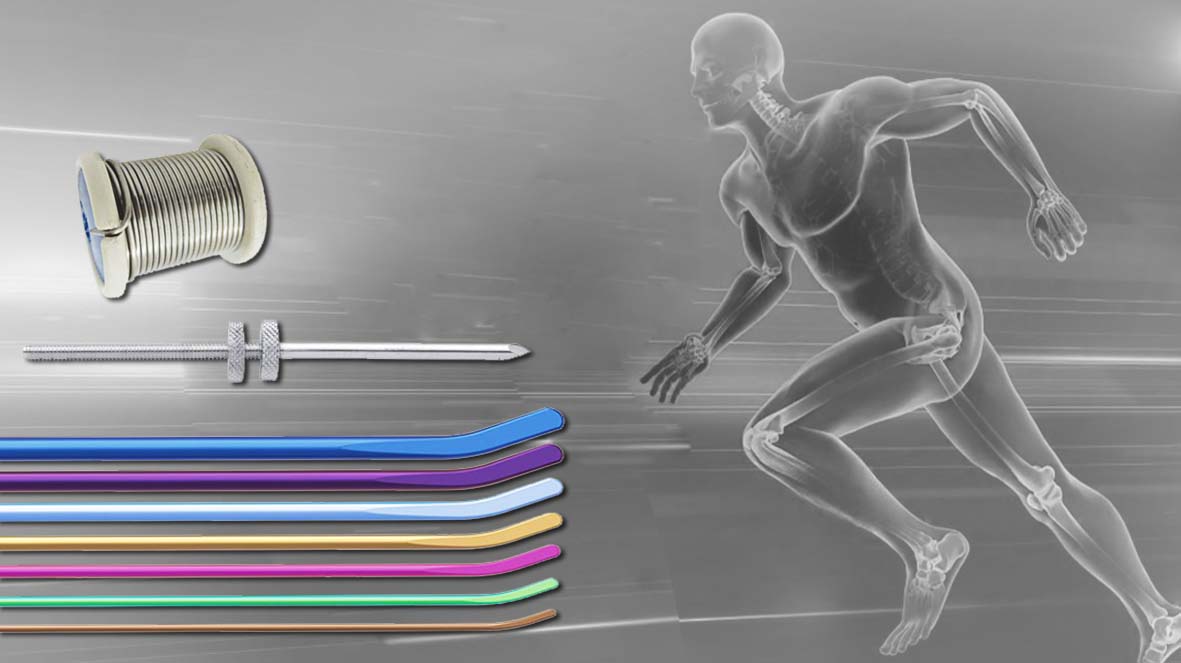
Orthopedic nails, wires, and pins are internal fixation devices used to stabilize and support fractured bones during the healing process. They are critical tools in modern orthopedic surgery, allowing for better alignment, stabilization, and earlier mobilization compared to traditional casting methods.
Interlocking Nail
Definition:
An interlocking nail is a type of orthopaedic implant used for the surgical treatment of long bone fractures, such as the femur, tibia, and humerus. It stabilizes the bone internally, allowing for proper alignment and faster healing.
Materials:
- Stainless Steel
- Titanium (preferred due to being lighter and more biocompatible)
Types of Intramedullary Nails:
- Static Interlocking Nail – Fixed locking screws at both ends prevent rotation and shortening.
- Dynamic Interlocking Nail – Allows controlled movement at the fracture site, promoting healing through micromotion.
- Universal Nail – Can be used for both static and dynamic fixation, depending on the placement of screws.
Advantages:
- Provides strong internal support
- Allows early mobilization and weight-bearing
- Minimally invasive, reducing infection risk
- Maintains proper bone alignment
Orthopedic Wires
Definition:
Wires in orthopaedic surgery are thin, flexible metallic devices used to hold bone fragments together or to assist in the alignment during fracture fixation. The most common type is the Kirschner wire (K-wire).
Types of Wires:
- irschner Wires (K-Wires): Thin, smooth, or threaded wires used for temporary or permanent fixation.
- Cerclage Wires: Used to encircle and compress bone fragments, often in conjunction with other fixation devices.
- Tension Band Wiring: Converts tensile forces into compressive forces across a fracture, typically used in patellar or olecranon fractures.
Materials:
- Stainless steel
- Titanium (less common for wires)
Indications:
- Small bone fractures (e.g., hands, feet)
- Temporary fixation during surgery
- Pediatric fractures
- Fracture fixation in conjunction with plates or nails
- Fixation of avulsion fractures
Advantages:
- Minimally invasive
- Can be removed easily after healing
- Versatile in various fracture types
Disadvantages:
- Less stable for weight-bearing bones
- Risk of migration (wires moving from their original position)
- Infection risk if wires protrude from the skin
- Often require supplementary fixation for complex fractures
Orthopedic Pins
Definition:
Pins are rigid, pointed metal rods used for internal fixation, either alone or in combination with other devices like plates or wires.
Types of Pins:
- Steinmann Pins: Thicker than K-wires, used for larger bones.
- Rush Pins: Flexible and used for intramedullary fixation, especially in pediatric fractures.
- Denham Pins: Threaded pins used in skeletal traction.
Materials:
- Stainless steel
- Titanium
Indications:
- Long bone fractures (e.g., femur, tibia)
- Skeletal traction
- Temporary fixation during complex surgeries
- Fixation of bone grafts
Advantages:
- Stronger than wires for larger bones
- Can be used for skeletal traction in complex fractures
- Relatively simple technique for insertion
Disadvantages:
- Risk of pin tract infection
- Possible damage to surrounding soft tissues or neurovascular structures
- May need removal after healing
Comparative Summary
| Aspect | Intramedullary Nails | Wires | Pins |
| Main Use | Stabilization of long bone fractures | Small bone fractures, temporary fixation | Skeletal traction, large bone fixation |
| Materials | Stainless steel, titanium | Stainless steel, titanium | Stainless steel, titanium |
| Advantages | Load-sharing, strong fixation | Minimally invasive, versatile | Stronger fixation, used in traction |
| Disadvantages | Risk of fat embolism, infection | Migration, less stable in large bones | Pin tract infections, soft tissue damage |
| Typical Indications | Diaphyseal fractures, non-unions | Pediatric fractures, small bones | Skeletal traction, large bone fractures |
Complications Associated with Nails, Wires, and Pins
Infection:
- Superficial or deep infections, especially with percutaneous wires and pins.
Migration:
- Wires and pins can migrate over time, potentially causing damage to surrounding tissues.
Neurovascular Injury:
- Improper placement can damage nearby nerves or blood vessels.
Non-union or Malunion:
- Failure of the bone to heal properly due to inadequate fixation or poor alignment.
Hardware Failure:
- Breakage or loosening of nails, wires, or pins, requiring revision surgery.
Conclusion
Orthopedic nails, wires, and pins are essential tools in fracture management and bone stabilization. Each device has specific indications based on the type and location of the fracture, patient factors, and the desired outcome. Advances in materials and techniques continue to improve patient outcomes, reduce complications, and allow for faster rehabilitation.

You must be logged in to post a comment.